Spice Substitutes · Substitutes
Cajun Seasoning Substitutes: Homemade, Creole and What to Do Without Either
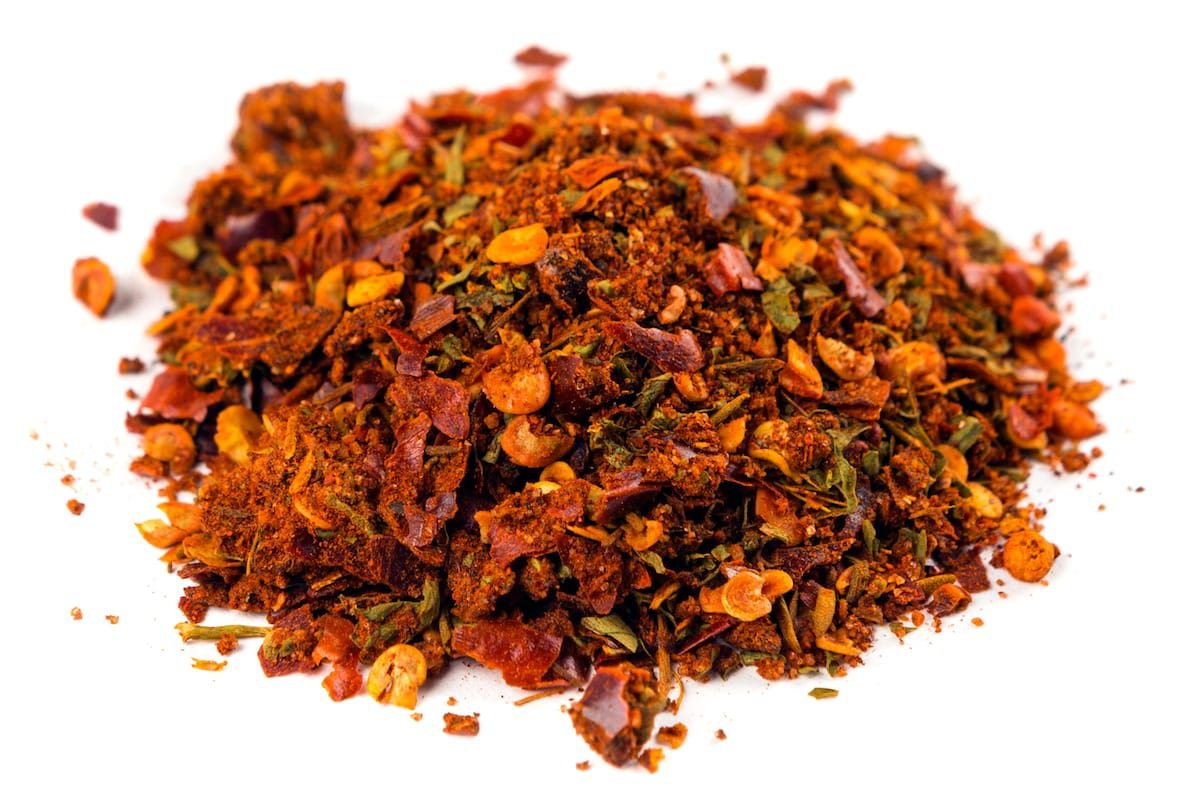
Out of Cajun seasoning? Mix your own from pantry spices, or grab Creole seasoning, the closest thing in a jar. Most versions pair salt with red pepper, paprika, garlic and onion, and the part people miss is the salt: two of the three commercial labels below put salt first, and the two that list sodium differ by a factor of two.12 So a good stand-in has to cover three things at once: salt, garlic and pepper flavor, and chile heat.
Quick answer
| What Cajun seasoning is doing | Best substitute | Starting amount, per 1 part Cajun seasoning | Treatment |
|---|---|---|---|
| Seasoning meat, seafood, rice dishes or a rub | Homemade Cajun seasoning | 1 part, then salt to taste | Method |
| The same, from a jar | Creole seasoning | 1 part, adjusted for salt by label | Computed (salt) |
| Bringing heat | Creole seasoning plus red pepper | 1 part, plus a pinch of cayenne or red pepper flakes | Attributed (direction), Method (amount) |
| Salt and garlic, with no Louisiana blend on hand | Adobo seasoning plus cayenne | 1/3 to 2/3 part adobo, then cayenne to taste | Computed (salt), Method (heat) |
| Chile flavor in a chili-style dish | Chili powder plus salt | 1 part, plus 1/4 to 1/2 part table salt | Method, Computed (salt) |
How the ratios on this page are labeled
Every ratio carries one of four labels.
- Computed: based on a measurable physical relationship.
- Attributed: a named source publishes this ratio. We quote it as theirs.
- Disputed: named sources give different answers to the same swap. You get each one, side by side.
- Method: our starting point, based on how the two compare. Taste and adjust.
The computed figures here are about salt only, worked out from the sodium on Nutrition Facts labels.
What you are replacing
| Blend | Ingredients, in order given | Sodium per 1/4 tsp | Source |
|---|---|---|---|
| Slap Ya Mama Original Blend | Salt, black pepper, red pepper, granulated garlic | 310 mg | 1 |
| McCormick Signature Seasonings Cajun | Salt, spices (including paprika, red pepper, thyme, black pepper, celery seed), garlic and onion | 160 mg | 2 |
| McCormick Gourmet Cajun | Spices (including paprika, black pepper, red pepper, celery seed), garlic, sea salt, onion, red and green bell pepper | Not listed on the retailer page | 3 |
| USDA purchasing specification, minimum list | Salt and spices (red pepper, paprika, garlic and onion) | Not specified | 4 |
The two labels that list sodium differ by a factor of two. Check which kind your recipe was written for. A recipe built around a salt-first blend may not tell you to add salt separately.
If you want the closest overall match
1. Make your own
It’s all standard pantry spices, so a homemade blend gets you closest.
A basic homemade Cajun seasoning: 2 tablespoons paprika, 1 tablespoon garlic powder, 1 tablespoon onion powder, 2 teaspoons ground black pepper, 1 teaspoon cayenne, 1 teaspoon dried thyme, 1 teaspoon dried oregano and 2 teaspoons table salt. That makes a little over 6 tablespoons. Cook’s Country’s Louisiana seasoning, which it offers for both Cajun and Creole cooking, also leads with paprika and garlic, plus thyme, cayenne and celery salt.5
Ratio (Method): Use the homemade blend 1:1 for flavor, then taste and add salt. Salt is 2 of about 19 teaspoons in the mix, so a quarter teaspoon carries roughly 60 mg of sodium, going by Morton’s 590 mg per quarter teaspoon (approximate, by volume).6 That’s well under the 160 to 310 mg on the labels above, so a dish written for a salt-first store blend will need more salt.
Want it hotter or milder? Change the cayenne. Louisiana’s tourism office makes the point that Cajun food is well seasoned, not necessarily hot: cayenne “is seasoning, not the main event.”7
2. Creole seasoning
Cajun and Creole name different cooking styles. The state tourism guide calls Creole cooking “city food” centered on New Orleans and Cajun cooking “country food.”7
On the spice shelf, though, the line is thin. Cook’s Country tests the two as one category.5 Tony Chachere’s Original Creole Seasoning lists salt, red pepper, black pepper, chili powder and garlic,8 close to the Slap Ya Mama Cajun blend above. The USDA’s purchasing specification does keep them apart: its Creole minimum adds black pepper, mustard and lemon peel to salt, paprika, garlic and cayenne.4 Tasting Table, citing MasterClass, says you can use the two interchangeably, with Cajun the spicier and Creole the more earthy.9 PepperScale also names Creole seasoning as a Cajun substitute, since they share so many ingredients.10
Ratio (Computed, salt only): Tony Chachere’s lists 340 mg of sodium per quarter teaspoon.8 Against Slap Ya Mama’s 310 mg, a 1:1 swap gives about 110 percent of the sodium, close enough to use as is. Against McCormick Signature’s 160 mg, 1:1 gives more than twice the sodium, so start with about half as much Tony Chachere’s and add paprika or garlic powder for bulk.2
For more heat (Attributed direction, amount): Tasting Table suggests adding red pepper flakes to Creole seasoning to push it toward Cajun, but doesn’t say how much.9 Start with a small pinch of cayenne or red pepper flakes per teaspoon of Creole seasoning, and taste.
If you have no Louisiana blend at all
Adobo seasoning, with cayenne
Goya’s adobo lists salt, garlic, black pepper, oregano and turmeric,11 and TASTE describes most adobo blends as garlic, pepper, salt and oregano.12 It shares the salt, garlic and black pepper of a Cajun blend like Slap Ya Mama, but it has no chile, so there’s no heat, and its oregano and turmeric aren’t on any of the Cajun labels above.
Ratio (Computed, salt only): Goya’s adobo carries 520 mg of sodium per quarter teaspoon,11 more than any Cajun label above. To match Slap Ya Mama’s salt, use about 3/5 as much adobo (310 ÷ 520). To match McCormick Signature, about 1/3 (160 ÷ 520).12
Heat: Add cayenne to taste, starting with a small pinch per teaspoon of adobo.
Old Bay seasoning
PepperScale lists Old Bay as a handy Cajun seasoning substitute.10 By PepperScale’s reading of the label, Old Bay is celery salt (salt and celery seed), spices including red and black pepper, and paprika, in that order, so it shares a Cajun blend’s salt, red pepper and black pepper. Its celery isn’t on the Cajun labels above, though, and garlic, which is on all of them, isn’t named on Old Bay’s. PepperScale’s own comparison puts it the other way around: Cajun runs hotter and more garlicky than Old Bay.13
Ratio (Method): Start with the recipe’s amount, taste, and add garlic powder and a pinch of cayenne to bring it closer.
Chili powder, with salt
The USDA’s purchasing specification says chili powder should include ground chili pepper, cumin, oregano, salt and garlic powder,4 and Saveur says the chile is usually ancho.14 So it shares Cajun seasoning’s chile and garlic but adds cumin and oregano, which nudge it toward chili con carne. It’s low in salt: USDA FoodData Central’s reference sample works out to about 77 mg of sodium per teaspoon (2,870 mg per 100 g, at 2.7 g per teaspoon).15
Ratio (Computed salt): Start with chili powder 1:1 for the spice, and add salt separately. To match the sodium in a teaspoon of Slap Ya Mama (about 1,240 mg), add about 1/2 teaspoon of table salt. For McCormick Signature (about 640 mg), add about 1/4 teaspoon.12 Morton lists its table salt at 590 mg per quarter teaspoon.6 Treat the 1:1 spice amount as a starting point. Chili powders vary in heat, so taste before you add cayenne.
What isn’t known
- There’s no published heat measurement for any Cajun blend, so how much cayenne to add comes down to taste.
- Brands don’t publish their spice proportions beyond the order of ingredients.
Related
- Cajun seasoning and Cajun vs. Creole seasoning
- Creole seasoning and Creole seasoning substitutes
- Adobo seasoning and adobo seasoning substitutes
- Chili powder, paprika, cayenne pepper, thyme
- Old Bay vs. Creole seasoning, all-purpose seasoning substitutes
Footnotes
-
Slap Ya Mama Original Blend Cajun Seasoning, ingredients and nutrition label, via Giant Food Stores. giantfoodstores.com · Merchant ↩ ↩2 ↩3 ↩4
-
McCormick Signature Seasonings Cajun, ingredients and nutrition label, via Giant Food Stores. giantfoodstores.com · Merchant ↩ ↩2 ↩3 ↩4 ↩5
-
McCormick Gourmet Cajun Seasoning, ingredients, via Giant Food Stores. giantfoodstores.com · Merchant ↩
-
Commercial Item Description A-A-20001C, Spices and Spice Blends, USDA Agricultural Marketing Service, 2023. ams.usda.gov · Regulator ↩ ↩2 ↩3
-
Louisiana Cajun or Creole Seasoning, Cook’s Country, America’s Test Kitchen, 2019. americastestkitchen.com · Publication ↩ ↩2
-
Morton Iodized Table Salt, product page, Morton Salt. mortonsalt.com · Merchant ↩ ↩2
-
Jay D. Ducote, Cajun vs. Creole Food: What is the Difference?, Explore Louisiana. explorelouisiana.com · Publication ↩ ↩2
-
Tony Chachere’s Original Creole Seasoning, ingredients and nutrition label, via Giant Food Stores. giantfoodstores.com · Merchant ↩ ↩2
-
Stephanie Friedman, Is It Possible To Substitute Creole Seasoning For Cajun Seasoning?, Tasting Table, 2023. tastingtable.com · Publication ↩ ↩2
-
Matt Bray, “What’s A Good Substitute For Cajun Seasoning?”, PepperScale, 2022. pepperscale.com · Publication · PepperScale is also owned by Matt Bray, the editor of this site. ↩ ↩2
-
Goya Foods, “Adobo All-Purpose Seasoning with Pepper”, trade product page. trade.goya.com · Merchant ↩ ↩2
-
Alicia Kennedy, article on adobo seasoning, TASTE, 2018. tastecooking.com · Publication ↩
-
Matt Bray, “What’s A Good Old Bay Seasoning Substitute?”, PepperScale, 2026. pepperscale.com · Publication · PepperScale is also owned by Matt Bray, the editor of this site. ↩
-
“Chili Powder”, Saveur, 2009. saveur.com · Publication ↩
-
Spices, chili powder (FDC ID 171319), USDA FoodData Central. fdc.nal.usda.gov · Regulator ↩