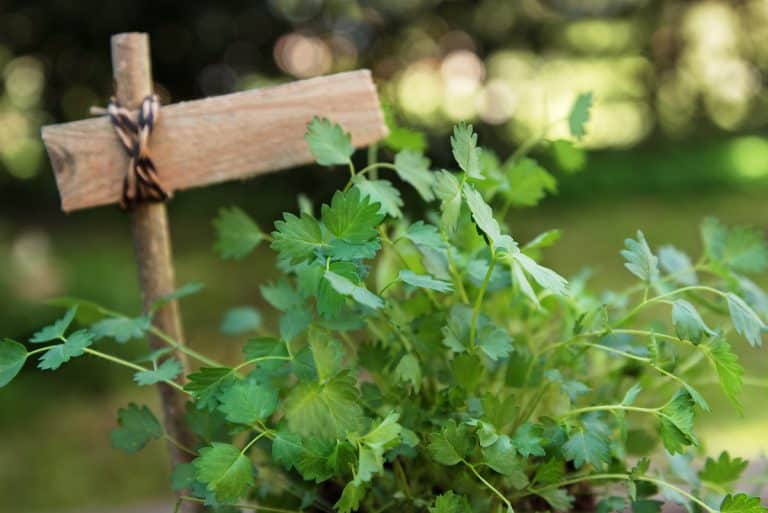
salad burnet

Salad Burnet: The Cucumber Herb

Depending on which source you believe, salad burnet’s place of origin is either the Mediterranean region or in the British Isles. Regardless of which location it comes from, you can find it all over Europe and in China. It has been used for more than 2,000 years and was known to the ancient Greeks, who used it for its medicinal benefits. Ancient practitioners of traditional Chinese medicine also used salad burnet for healing.

Salad burnet is sometimes known simply as burnet or garden burnet; however, it is different from the taller plant known as great burnet. Salad burnet’s name comes from the French word brunette.
Read more

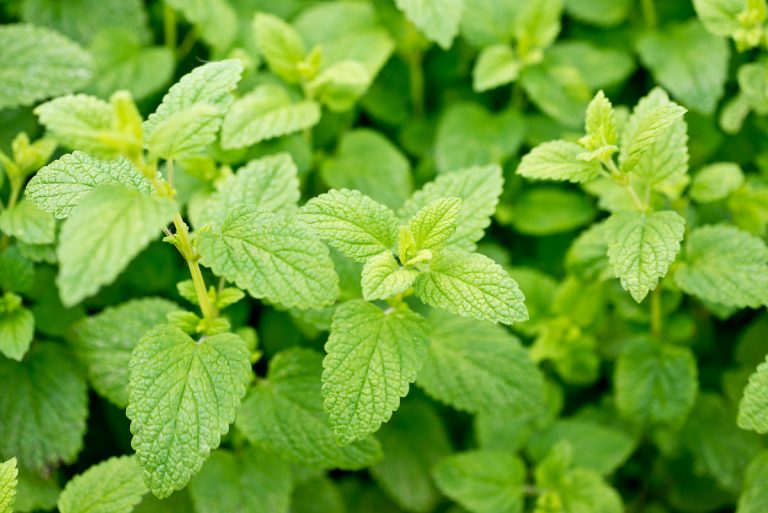
lemon balm

Lemon Balm: A Lemony Sedative Herb

The use of lemon balm has been documented in 300 BCE, which means that this herb has been in use for well over two millennia. Historians believe lemon balm to have originated in Southern Europe and was introduced to Spain in the 7th century by Moors.

The Greeks referred to it by what is now its genus name—Melissa. Melissa is the Greek word for bee. The Greek physician Dioscorides, who lived in the first century wrote that lemon balm aided with menstruation and gout. Pliny the Elder stated that lemon balm encouraged bees to return to their hives when planted in the vicinity of the hives. It would be cultivated all over Europe by the Middle Ages. The Persian philosopher Avicenna (who lived from the year 980 to 1037) wrote that lemon balm was an effective treatment for depression.

Read more

lemon verbena

Lemon Verbena: A Lemon-Scented Herb From South America

Lemon verbena is a lemon-scented herb native to South America. It is often confused with lemon balm as the two herbs have the word lemon in their names. Lemon verbena and lemon balm are two distinct herbs; lemon verbena belongs to the Verbenaceae family while lemon balm belongs to the mint family.

Its Latin name is Aloysia citrodora; however, that was not its first name as the plant has had several names since it first arrived in Europe. Its first name was Aloysia triphylla, which came from Philibert Commerson, a French botanist. He was the first to notice the plant while circumnavigating the globe. Spanish professors Casimiro Gomez Ortega and Antonio Palau y Verdera would rename it in honor of Maria Luisa Teresa de Parma who was married to the son of King Carlos III. Lemon verbena would become known as yerba luisa in Spain as a result. Other names for lemon verbena include Lippia citrodora and Verbena citrodora.

Read more

lilac

Lilac: A Flower With True Flavor

Lilacs have as long a history as the histories of roses and tulips. The lilac plant belongs to the same family as the olive. According to Greek mythology, this flowering plant originated from a nymph who turned herself into a lilac bush to escape the attention of Pan. The first varieties of lilac came from Europe and Asia and were first introduced to Vienna in the 16th century. They were afterward brought to the new world by colonists who wanted flowers that reminded them of their homes in Europe. Lilacs could be found all over the eastern side of North America by the time the revolutionary war was fought. Both George Washington and Thomas Jefferson mention planting them in their writings.

Today, there are more than 20 different lilac species. You can find lilac growing wild in abandoned lots and old homesteads.

Read more

rose petals

Rose Petals: A Persian Spice

Rose petals were used in Ancient Egypt, but rose plants are thought to have originated in Asia and were first cultivated by the Chinese 5,000 years ago. The petals were also popular in Rome and Greece with the oil produced from them being used as both a medicine and as a perfume for wealthy Romans. The Romans also used them as adornments at weddings where they were made into crowns to be worn by the bride and the groom. In addition, the Romans believed that adding rose petals to wine helped to prevent drunkenness.

Roses have been used in Persian cuisine for 3,000 years. In fact, the use of rose petals in Middle Eastern cooking is largely the product of Persian influence. Rose petals (along with other Persian staples) were adopted throughout the Middle East after Persia’s conquest by Arabs and would eventually be used in many cuisines throughout the world including Indian and Chinese food. While many Persians adopted various aspects of Arab culture, they retained their unique cuisine with few changes. It was allowed to remain the same because the Arabs enjoyed Persian food.

Read more

sweet cicely

Sweet Cicely: A Rare European Herb

While the history and use of sweet cicely are not widely documented in ancient texts, what is known is that the name sweet cicely goes back to ancient Greek. The Greek term seselis is the origin of the sweet cicely’s name and appears to have been used in reference to a number of herbs. In addition, sweet cicely is often referred to in different European languages as Spanish chervil or Roman chervil. It should be noted that the American version of this herb is not related to the European sweet cicely though it does have a somewhat similar appearance. The European sweet cicely is Myrrhis odorata; the American version is Osmorhiza longistylis.

Read more

Orange peel

Orange Peel: The Most Aromatic Part Of The Fruit

The orange tree has been grown in Asia since antiquity, but it was not until the 1st century BC that the western world would become acquainted with its fruit. Historians state that there were oranges growing in India 7,000 years ago. The name orange is believed to from narangah, which …

Read more

sorrel

Sorrel: The Sour Herb

The word sorrel is derived from a French word meaning sour. It is a relative of buckwheat and different from Jamaican sorrel, which is in the hibiscus family. The sorrel herb has been in use since ancient times in both Egypt and Europe. At the start of the colonial era, …

Read more