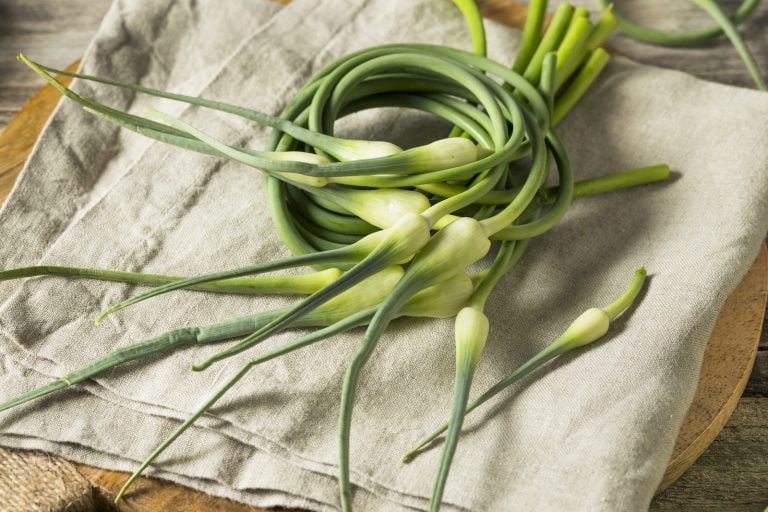
Garlic Scapes

Garlic Scapes: A Unique Source Of Garlic Flavor

Garlic scapes are the green shoots of the garlic plant. Garlic has been used as food for thousands of years. It is one of the first plants to be cultivated and the Ancient Egyptians revered it. The Egyptians used garlic to feed workers, and a shortage of garlic was known to cause work stoppages among the slaves who built the pyramids. The believed that garlic enhanced the laborer’s capacity for work. Garlic was among the items found by excavators in Tutankhamun’s tomb in the early 20th century. The Papyrus Ebers — which dates back to 1550 BCE — shows that garlic was prescribed in Ancient Egypt. It was used to treat abnormal growths and problems involving blood circulation.

The Ancient Greeks were also believed to be fans of garlic as evidenced by archaeologist’s findings in Crete. Greek temples dating back to 1400 BCE contained garlic. The Greeks also believed that garlic could improve a worker’s strength and stamina. They added it to the diets of soldiers who were going into battle. It may have been provided to athletes in the first Olympics before they competed.
Read more

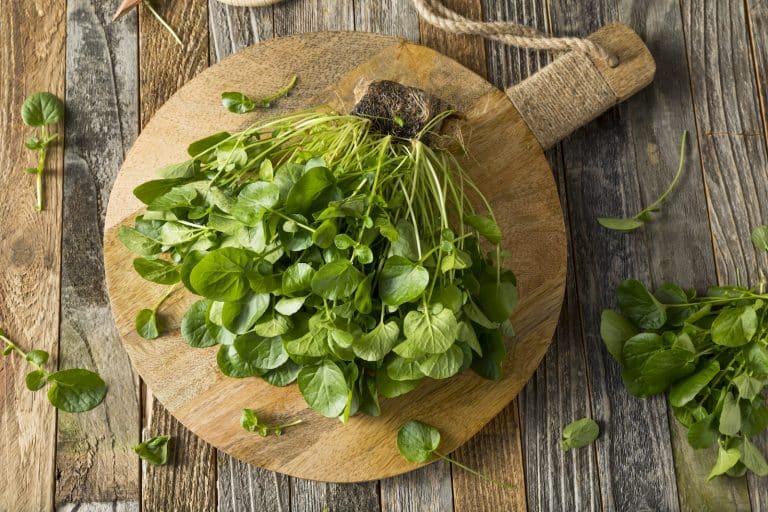
Watercress

Watercress: The Original Leafy Green

Watercress is an aquatic herb that came initially from Eurasia, but you can now find it growing all over North America. It belongs to the Brassicaceae family to which cabbage and mustard also belong.

Watercress is believed to be one of the first leafy vegetables consumed by humans.

The Ancient Egyptians used watercress along with the Ancient Greeks and Romans used. Hippocrates grew the herb and used it as a treatment for blood disorders. In the First century, it was documented by Dioscorides in his Materia Medica. Dioscorides believed watercress to be an aphrodisiac. At the time, watercress was a culinary herb in Asia. Other mentions of it occurred in the 11th century where it showed up in an Anglo-Saxon herbarium. In the 16th century, botanist Leonhart Fuchs brought it to light and it would become a staple medicinal herb throughout Europe. Up until the Renaissance period, Europeans used the watercress mainly to freshen the breath and as a medicine.

Read more

Pineapple Sage

Pineapple Sage: Sage With A Hint Of Tropical Fruit

Pineapple sage is known by other various names, including its botanical name Salvia elegans. It is called tangerine sage in some places. It has been cultivated since 1870 and was given the name Salvia rutilansas in 1873, a name which has now been largely forgotten. The herb is native to Central America where it grows wild in the pine-oak forests of Mexico and Guatemala. In Mexico, some refer to it as mirto or yerba del burro. The plant is not related to pineapples despite its common name and distinctive aroma; however, it is related to common sage and is in the mint family.

Pineapple sage is still a popular herb as far as Mexican folk medicine is concerned. Practitioners of traditional Mexican medicine use it as a sedative and to lower blood pressure.

Read more

Thankuni

Thankuni: The Longevity Herb

Thankuni is a creeping perennial that belongs to the Apiaceae family, and that goes by several other names. It is a relative of various other better-known herbs such as parsley and cilantro. Its aliases include its botanical name, Centella asiatica as well as pennywort. While it has been naturalized to other parts of the world, it grows primarily in Southeast Asia and prefers humid and swampy climates. In some parts of the world, many know thankuni by another alias: gotu kola.

The kola part of the name may seem to imply a relationship with the kola nut, but the kola nut — which is the flavoring in cola sodas — comes from an entirely different plant.

Indians and Chinese have used this herb for millennia. In Ayurveda, it is considered a kind of anxiolytic. You can find thankuni documented in ancient Sanskrit texts as a remedy for cardiovascular illness as well as for respiratory ailments like bronchitis. Chinese legend has it that a herbalist who consumed thankuni lived for over 250 years. The herb is still used in traditional Chinese medicine. Thankuni became popular in Sri Lanka as well when people noticed that elephants seemed to be attracted to it. Elephants are known to have long lives.

Read more

Milk Thistle

Milk Thistle: A Liver-Friendly Herb

Milk thistle is a member of the Asteraceae family and comes from the Mediterranean region; you can also find it growing in parts of Russia, North Africa and in Asia Minor. Other parts of the world to which it has been exported include the New World and Australia.

Greek physician and philosopher Galen praised milk thistle as an essential herb for liver health. Both Pliny the Elder and Dioscorides make mention of it as well. Dioscorides considered milk thistle an effective treatment for snakebites. Milk thistle’s botanical name is Silybum marianum. The genus name’s origin is the Greek word for tuft; the species name is Latin and refers to the Virgin Mary.

Milk thistle continued to a folk remedy for liver problems through the Middle Ages. In the 1500s, John Gerard wrote that it was an effective treatment for depression and emotional issues. Adam Lonicerus would provide yet another endorsement of milk thistle as a remedy for liver ailments.

Read more

Garlic chives

Garlic Chives: The Herb For A Milder Garlic Flavor

Garlic chives are native to East Asia. This herb can be found all over the continent from Mongolia to the Philippines. Garlic chives have been cultivated in China for more than 3,000 years. This herb was also documented as having health benefits in ancient Chinese medical texts written during the Ming Dynasty. Garlic chives were prescribed to treat joint and muscle pain as well as frequent urination.

It is important to note that garlic chives differ from garlic scapes, which refers to the green part of the garlic plant. They are related to garlic scapes and share many of the same properties but are also dissimilar in some ways.

Garlic chives go by several names in addition to its Latin name, Allium tuberosum. You will sometimes see garlic chives referred to as Chinese chives or Chinese leeks.

Read more

Arugula

Arugula: Italy’s Favorite Salad Green

In Ancient Egypt and Ancient Rome, arugula was well known and cultivated for its leaves and seeds. Virgil considered it to be an aphrodisiac for drowsy people. The leaves formed a part of a first-century Roman salad that featured other vegetables and herbs still in use today, including romaine and lavender. At the time, arugula seeds were also used to flavor oils.

Pliny the Elder mentioned arugula in his Historia Naturalis. In addition to noting its use as an aphrodisiac, he documented another way to use it: as an anesthetic. Over the centuries after, arugula would make its way throughout Europe and its popularity would rise and fall both on the European mainland and in the British Isles. Arugula would remain popular in Italy and would eventually be brought to the U.S. by Italian immigrants. It would be popular mainly among this population throughout the 19th century and most of the 20th.

Read more

Bergamot

Bergamot: A Native American Herb

The term bergamot typically refers to either an extract from a citrus fruit (Citrus bergamia) and the fruit itself, or to a North American herb (Monarda didyma).

The herb is a member of the mint family with leaves that look similar to those of spearmint, while the fruit has the appearance of a lime.

The bergamot herb is associated with the Oswego tribe from the northern part of New York state. They used it to make a medicinal tea that would increase in popularity among colonists after the Boston Tea Party.

Read more