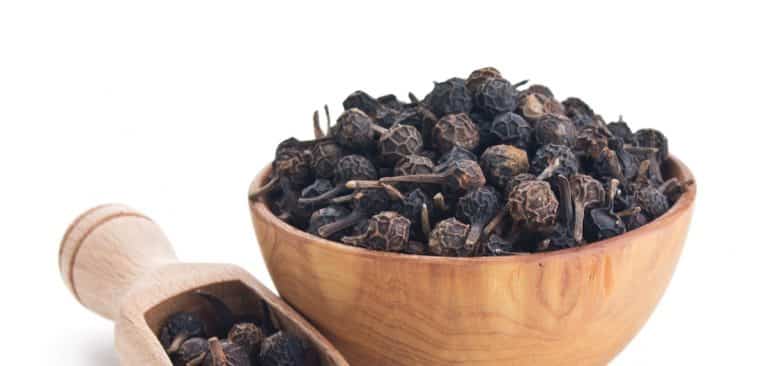
cubeb pepper

Cubeb Pepper: The Indonesian Black Pepper

Cubeb pepper is also sometimes called cubeb berry and originated in Indonesia. While cubeb pepper is widely reported to have reached Europe via Venetian trade with the Arabs around the 14th century, historians believe that its connection to Europe is actually far older than that. In fact, the writings of Theophrastus show that the Ancient Greeks traded with Java and were early consumers of cubeb pepper. This means that the spice was used in Europe as early as the 4th century BC. When trading the peppers, the Indonesian farmers would sterilize the berries by scalding them to keep them from being grown elsewhere.

Cubeb pepper also made its way to China during the Tang Dynasty. It is known to have been used by the Arabs in the 9th century as a medicine and then in food during the 10th. The name cubeb comes from the Arabic word for the spice: al-kabaabah.
Read more

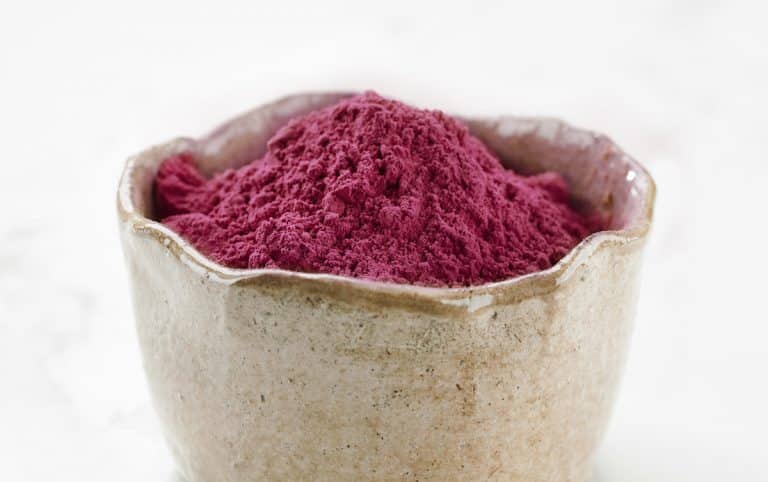
beet powder

Beet Powder: Natural, Healthy, and Colorful

Beet powder consists of beetroot that has been dried and ground to a powder. Beet powder has a longer shelf life and is easier to consume when compared to fresh beets or beet juice. Beets belong to the same family as the grain amaranth.

Beets were first domesticated in Italy. Hybrids were cultivated using wild red, white, and other varieties to arrive at the various beet cultivars and beet relatives that we have available today. The earliest forms were longer, more cylindrical and bore a closer appearance to carrots or parsnips rather than the modern spherical variety.

The word beet is believed to have a Celtic origin. The root vegetable that it denotes has been used for much of human history. The earliest records of people consuming beets go as far back as 4000 BCE in Egypt. The Ancient Greeks and Romans both enjoyed them as well and developed methods for growing them during the summer, despite the fact that beets traditionally grew in the winter. Note that the earliest efforts at cultivating beets focused on the greens rather than the roots, which were sometimes used in medicine but not as food. The roots would be cultivated for consumption in 16th century Europe.

Read more

Wasabi

Wasabi: A Truly Japanese Spice

Wasabi is a Japanese root that belongs to the same family as horseradish, cabbage, and mustard. It has been an important ingredient in Japanese cuisine for centuries. Wasabi is also known as Japanese horseradish; its Latin name is Wasabia japonica.

The Honzo Waymo is Japan’s oldest botanical dictionary. It is believed to have been compiled in the year 918. The dictionary included numerous references to wasabi, which was then being used medicinally. It was considered an antidote to food poisoning, which would have been useful given the amount of raw fish in the Japanese diet. Similarly, the spice is mentioned in Japan’s oldest compilation of penal codes and other rules, called the Engishiki.

Read more

horseradish

Horseradish: For More Than Just Cocktail Sauce

Horseradish was being used by the Egyptians in 1500 BCE. It would later be used by the Greeks as well. They used it topically and it also had a reputation as an aphrodisiac. It would be among the bitter herbs consumed during Passover by the Jews and they used it as a medicine as well.

The name is believed to have originated with the Germans who referred to it as meerrettich. The meer part refers to the sea because horseradish typically grows on the coast. The English began referring to it as mareradish, which would eventually become horseradish. The horse in this usage denoted something that was coarse or large. The radish part of the name comes from the Latin word for root.

The European consumption of horseradish as a food began in the central part of the continent and spread north to Scandinavia and west to the UK. It would first be eaten by rural British laborers and the working class in the mid-1600s. By the end of the century, it had become a staple condiment for British roast beef and for oysters. It was also the main ingredient in a tonic served to travelers lodging at inns.

Read more

Galangal

Galangal: Ginger’s Milder Cousin

Galangal is a relative of ginger that originated in Indonesia but that is now cultivated throughout Asia. The earliest reports of its use come from Java and from China. It is a rhizome, just like ginger and bears a close resemblance to it. Galangal was known to the ancient Romans; it was one of the spices imported into Europe during the early spice trade and Apicius included it as an ingredient in his recipes.

The name galangal is thought to have evolved from an Arabic word, khalanjan. Khalanjan means mild ginger and may have come from Liangtiang, which means the same thing in Chinese. Its Latin name is Alpinia, which was given as a commemoration of Prospero Alpini, the Italian botanist.

Galangal was brought to Europe in the 9th century by Arabs who used it as a medicine. It was referred to as the spice of life by the 9th-century mystic Hildegard of Bingen. It shows up in English recipes from the Middle Ages; at this time, its name was written as galangale. Despite its centuries-long usage in both Asia and Europe, it was not formally recognized and given a biological classification until the late 19th century.

These days, most of the galangal in the world comes from India or Thailand. The Netherlands imports a significant amount of this spice.

Read more

charoli

Charoli: An Indian Spice With Nutty Qualities

Charoli is the name for the seeds of the Buchanania lanzan plant. The seeds are also commonly known as chironji seeds or almondettes. The Buchanania lanzan plant grows wild in forests all over India. Charoli is commonly identified with food from the state of Maharashtra, which spans western and central India. The seeds are harvested by the state’s tribal population, for whom they are a source of income.

According to practitioners of Ayurvedic medicine, charoli can enhance your life force and purify your blood. Charoli has been used for centuries in India and is mentioned in ancient Sanskrit texts.

These days, the Buchanania lanzan trees in India are considered a vulnerable medicinal plant due to excessive deforestation and over-exploitation.

Read more

nigella seeds

Nigella Seeds: The Oregano-Flavored Spice

Nigella seeds are also called black seeds or black cumin, among several other names. The plant from which this spice comes is a relative of the buttercup that originated in the Mediterranean region. Historians believe that it was first used as a culinary spice in Turkey and Syria. You can find the nigella plant growing wild in Egypt and India, but it is also cultivated in those places. It can be found elsewhere in Northern Africa as well, in addition to the southern parts of both Asia and Europe.

Nigella seeds were found in the tomb of Tutankhamun; interestingly, they were still usable. The seeds were used by Cleopatra because of their health- and beauty-enhancing properties. Nefertiti was praised for her perfect complexion and is said to have been an avid user of the oil from nigella seeds. It was commonly recommended by the physicians of ancient Egypt as a treatment for colds and headaches among many other ailments.

Many believe that nigella seeds have been mentioned in the Bible. The Book of Isaiah documents a spice that many interpret to mean nigella seeds.

Read more