Cooking · Dish guide
Good Mexican Spices for Chicken: Chiles, Achiote, Mexican Oregano and Cumin
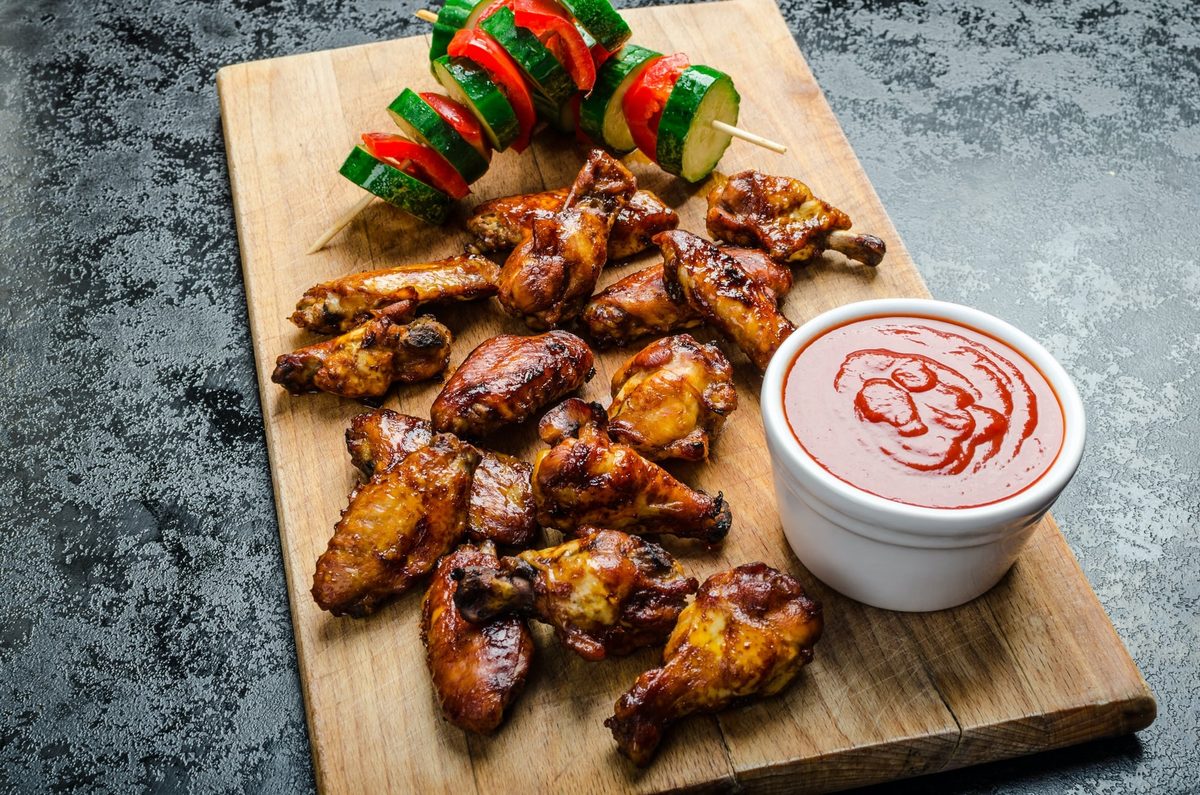
What makes chicken taste Mexican? Mostly dried chiles, for heat, color and body, on a savory base of garlic and onion. Mexican oregano and a little cumin come next, and in the Yucatán, achiote turns the chicken red-orange. Four named recipes, two tingas, a pibil and a grilled chicken, show how the amounts play out. Whatever you make, cook the chicken to 165°F (73.9°C), the USDA safe minimum for all poultry.1
At a glance
| Seasoning | Job in the dish | Example |
|---|---|---|
| Dried chiles (chipotle, ancho, guajillo, árbol) | Heat, color, smoky or fruity depth | Chipotle in tinga; ancho powder in Bayless’s grilled chicken23 |
| Garlic and onion | Savory base | Garlic in all four recipes below2453 |
| Mexican oregano | Sharp, pungent herbal note | Tinga, pibil, red-chile chicken453 |
| Cumin | Warm, earthy accent | Small amounts in two of the four53 |
| Achiote (annatto) | Red-orange color, little flavor | Pollo pibil5 |
Four chicken recipes side by side
| Chicken tinga (Pati Jinich)2 | Chicken tinga tacos (Rick Bayless)4 | Pollo pibil (Rick Bayless)5 | Red-chile grilled chicken (Rick Bayless)3 | |
|---|---|---|---|---|
| Chicken | 5 cups cooked, shredded | 1 lb boneless thighs | 12 small bone-in thighs | Bone-in breasts and thighs |
| Chile | 2 tbsp chipotle adobo sauce | 3 to 4 pickled or canned chipotles | Not in the lines checked | A 2-oz bottle of pure ancho powder |
| Herbs | 1/2 tsp dried oregano; 1/4 tsp each dried marjoram and thyme | About 1 tsp Mexican oregano | 2 tsp dried Mexican oregano | 1/2 tsp dried oregano, preferably Mexican |
| Cumin | None | None | 1/2 tsp cumin seeds | A big pinch, ground |
| Garlic | 2 cloves | 3 cloves | 10 cloves | 4 cloves |
| Other | Tomatoes, tomatillos, onion | Tomatoes, onion | 2 tbsp achiote seeds; lime and orange juice | 1/4 tsp cinnamon (canela); cider vinegar; black pepper |
These are each cook’s own recipes, not a house standard.
The core seasonings and what each one does
Dried chiles
Chiles carry most Mexican chicken dishes, and each type does a different job.
- Chipotle gives tinga its smoky heat; Bayless describes the dish as chicken with roasted tomato, caramelized onion and smoky chipotle.4 See chipotle powder.
- Ancho is a dried poblano with sweet, smoky flavors and hints of dried fruit. The Chile Pepper Institute rates it mild, at 1,000 to 2,000 Scoville heat units, and calls it a key ingredient in mole.6 Bayless’s grilled chicken uses ancho powder as the base of a quick red chile adobo.3 See ancho powder.
- Guajillo is one of the main Mexican chiles grown for drying, and Mexican researchers use guajillo and mirasol as names for the same chile type.7 INDY Week notes it’s often used as a rub on chicken.8 See guajillo powder.
- Chile de árbol is a long, pointed chile of biting heat. Gernot Katzer notes that it’s less aromatic but more pungent than the milder mole chiles it’s often paired with.9 Use it for extra heat. See chile de árbol powder.
Garlic and onion
Garlic shows up in all four recipes above, from 2 cloves in Jinich’s tinga to 10 in Bayless’s pibil, and both tinga recipes start by softening onion. Neither is unique to Mexican cooking, but the savory base of most of these dishes starts with them.
Mexican oregano
Mexican oregano is a different plant from Mediterranean oregano. PROSEA calls it an important spice in Mexico and Central America and describes its flavor as stronger, sharper and more pungent than true oregano.10 Three of the four recipes above call for it. Mediterranean oregano will do in a pinch but tastes different; see Mexican oregano substitutes and Mexican oregano vs. oregano.
Cumin
Cumin is especially popular in Latin American cuisines and a standard part of chili powders. In these chicken recipes, it’s an accent, not a base: 1/2 teaspoon of seeds in Bayless’s pibil, a big pinch in his grilled chicken, and none in either tinga. See cumin uses and too much cumin.
Achiote (annatto)
Achiote is the Mexican name for annatto seeds. Katzer notes that the seeds’ weak, perfumed aroma doesn’t carry into the food, so achiote’s main job is the red-orange color that pale chicken otherwise lacks. In the Yucatán, meat is marinated in a spice paste called recado, made from annatto, and food cooked that way is called pibil.11 Bayless’s pollo pibil uses 2 tablespoons of achiote seeds with Mexican oregano, cumin, garlic and lime and orange juice, and marinates the chicken for at least 4 hours.5 See cooking with annatto seeds and achiote powder.
Related
Footnotes
-
“Safe Minimum Internal Temperature Chart”, USDA Food Safety and Inspection Service, updated 2025. fsis.usda.gov · Regulator ↩
-
Pati Jinich, “Chicken Tinga (Tinga de Pollo)”, patijinich.com. patijinich.com · Publication ↩ ↩2 ↩3
-
Rick Bayless, “Red-Chile Grilled Chicken”, RickBayless.com. rickbayless.com · Publication ↩ ↩2 ↩3 ↩4 ↩5 ↩6
-
Rick Bayless, “Chicken Tinga Tacos”, RickBayless.com. rickbayless.com · Publication ↩ ↩2 ↩3 ↩4
-
Rick Bayless, “Pollo Pibil”, RickBayless.com. rickbayless.com · Publication ↩ ↩2 ↩3 ↩4 ↩5 ↩6
-
“Ancho”, Chile Pepper Institute, New Mexico State University. cpi.nmsu.edu · Reference work ↩
-
Santiago-López et al., “HMG14E, híbrido de chile guajillo”, Revista Fitotecnia Mexicana. revistafitotecniamexicana.org · Peer-reviewed ↩
-
Lisa Sorg, “DISH: Tips on which peppers suit which dish”, INDY Week, 2015. indyweek.com · Publication ↩
-
Gernot Katzer, “Paprika and Mexican chiles (Capsicum annuum)”, Gernot Katzer’s Spice Pages. gernot-katzers-spice-pages.com · Reference work ↩
-
H.C. Ong and M. Brink, “Lippia graveolens”, PROSEA, via Pl@ntUse. uses.plantnet-project.org · Reference work ↩
-
Gernot Katzer, “Annatto (Bixa orellana L.)”, Gernot Katzer’s Spice Pages. gernot-katzers-spice-pages.com · Reference work ↩
Also drawn on
- Cumin, Encyclopaedia Britannica (revised by Sohini Dasgupta). britannica.com