Spice Substitutes · Substitutes
Grains of Paradise Substitutes, Ranked by the Job the Spice Is Doing
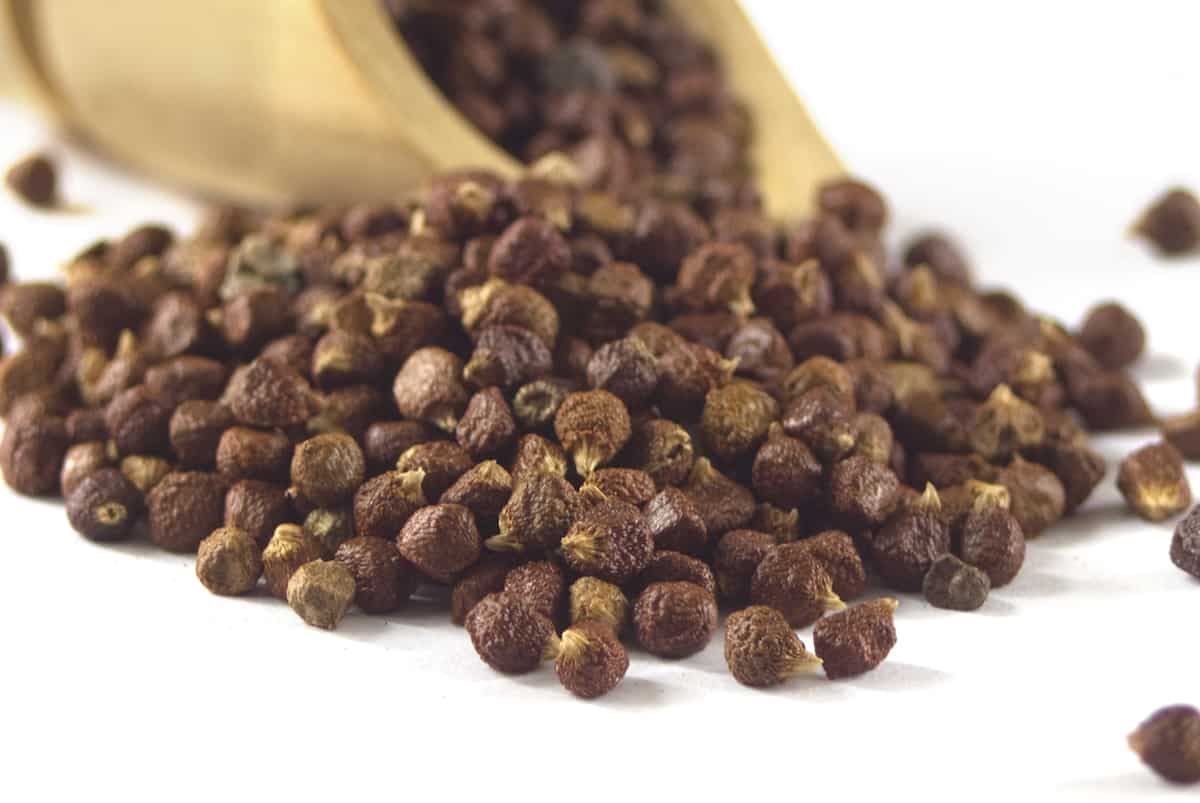
Grains of paradise were once a common stand-in for black pepper in Europe, and today the swap runs the other way: black pepper is the closest substitute for them. Use less pepper than the recipe’s grains of paradise, and expect to lose the floral, slightly citrusy side, with its hints of cardamom and coriander. A pinch of cardamom, coriander or ginger alongside the pepper brings some of that back. And if a West African recipe calls for alligator pepper, you may already have the right spice.
Quick answer
| What grains of paradise are doing | Best substitute | Starting amount, per 1 part grains of paradise | Treatment |
|---|---|---|---|
| Peppery heat (pepper mill, steak, eggs, vegetables) | Black pepper | 1/2 part, then taste | Method |
| Floral, citrusy warmth (spice blends, beer, spiced wine) | Black pepper plus a pinch of cardamom or coriander | 1/2 part pepper plus a pinch | Method |
| A slow, ginger-like burn | Black pepper plus a little ground ginger | 1/2 part pepper plus a pinch | Method |
| Lemony bite on a finished dish | Sansho (Japanese pepper) | 1/4 part, then taste | Method |
| Switching between whole and ground pepper | Ground black pepper for whole | 1 tsp whole = 1½ tsp ground | Computed |
If a West African recipe calls for alligator pepper, you may not need a substitute at all. That’s a common name for the same plant (more below).
How the ratios on this page are labeled
Every ratio carries one of four labels.
- Computed: based on a measurable physical relationship.
- Attributed: a named source publishes this ratio. We quote it as theirs.
- Disputed: named sources give different answers to the same swap. You get each one, side by side.
- Method: our starting point, based on how the two compare. Taste and adjust.
The Spice House, which sells grains of paradise, says you can use them in place of black pepper but that “their flavors are uniquely different.” You’ll find a 1:1 figure credited to the company elsewhere online, but it doesn’t come from its article or its product page.12
Why the flavor is hard to copy
The heat comes from the same family of compounds that gives ginger its bite, not from piperine, the compound behind black pepper’s.3
So the best substitutes are combinations: black pepper for the bite, plus a little of a second spice for the floral, citrus or ginger side.
If grains of paradise are the peppery heat
1. Black pepper
This is the old swap run in reverse: grains of paradise were once a common substitute for black pepper in Europe.
Black pepper will taste sharper. Katzer says the heat of grains of paradise is less strong than pepper’s.3 The Spice House’s staff writer puts them closer, calling them “almost as hot as black pepper.”1 Either way, use less black pepper than the grains called for. You’ll lose the floral, citrus note.
Ratio (Method): Start with about half as much black pepper, taste, and add more a little at a time.
Whole or ground (Computed): McCormick’s conversion is 1 teaspoon peppercorns = 1½ teaspoons ground pepper.4 That’s a volume figure for black pepper only. It tells you nothing about the strength of grains of paradise.
If grains of paradise are floral, citrusy warmth
This is their job in long spice blends, in beer, and in old recipes for sausages and spiced wine. They’re in some ras el hanout blends, such as World Spice Merchants’,5 though plenty of ras el hanout recipes leave them out.
1. Black pepper with cardamom
Cardamom is a ginger-family relative, and The Spice House picks up hints of cardamom in grains of paradise.2 Their main aroma compounds differ, though. Cardamom adds a cool, floral lift but no heat, so it needs black pepper alongside.
Ratio (Method): Use half as much black pepper as the grains called for, plus a small pinch of ground cardamom per teaspoon, then taste. Cardamom is easy to overdo.
2. Black pepper with coriander
The Spice House’s staff writer notes a tangerine sweetness in freshly ground grains of paradise, “similar to freshly ground coriander,”1 and the product page mentions coriander too.2 Coriander is the gentler of the two options.
Ratio (Method): Use half as much black pepper as the grains called for, plus a pinch of ground coriander per teaspoon, then taste.
3. A blend that already contains cardamom
If grains of paradise are just one of many spices in the recipe, a ready-made blend can fill the gap. The USDA purchasing spec for curry powder lists cardamom with turmeric, coriander, fenugreek, cinnamon, cumin, black pepper and ginger.6 That brings a lot of other flavor along, so use it only where those spices suit the dish.
Ratio (Method): Start with half the amount and taste.
If grains of paradise are a slow, ginger-like burn
Black pepper with ground ginger
Ginger’s heat comes from the same group of compounds as the heat in grains of paradise. The Spice House’s writer compares the bite of grains of paradise to ginger’s, “but deliciously amplified.”1 A little ground ginger with black pepper gets you closer to that slow burn than pepper alone.
Ratio (Method): Use half as much black pepper as the grains called for, plus a pinch of ground ginger, then taste.
If grains of paradise are a finishing spice
Sansho (Japanese pepper)
Sansho is a relative of Sichuan pepper. Katzer describes a fresh, pleasant lime fragrance and a well-developed pungency, along with a numbing, almost anaesthetic feeling on the tongue.7 The lime note is a fair echo of the citrus in grains of paradise. The numbing isn’t.
Ratio (Method): Start with about a quarter of the grains-of-paradise amount, ground, and sprinkle it on at the end.
Substitutes that do not work well
Pink peppercorns. These come from trees in the cashew family, not from pepper. Katzer says they’re named for their shape only, not their flavor, and describes them as sweet and aromatic, similar to juniper.8 Atlas Obscura calls the flavor only slightly peppery,9 so you get color and a resinous sweetness but little heat. Atlas Obscura also reports an allergic reaction in a person with a tree nut allergy.9
Ratio (Method): If you use them for looks, crush them and add black pepper for the bite.
Grains of paradise and alligator pepper
A 2026 review calls grains of paradise “also known as Alligator pepper or Guinea pepper,”10 and Katzer lists alligator pepper among its English names.3 Food writer Yewande Komolafe includes alligator pepper seeds in the spice for pepper soup.11 So if your recipe calls for alligator pepper and you have grains of paradise, you’ve already got the right spice. See alligator pepper.
What isn’t known
- You’ll often read that grains of paradise should go in only at the end of cooking because they don’t handle heat well. No source we found says so.
- Calling grains of paradise a standard ras el hanout ingredient overstates it. They’re in some versions.35
Related
- Grains of paradise, the full profile, and alligator pepper
- Black pepper and black pepper substitutes
- Cardamom, cardamom substitutes, ginger, coriander
- Sansho pepper, Sichuan pepper, pink pepper
- Cubeb pepper and long pepper, other old pepper alternatives
- Ras el hanout, Moroccan spices, Nigerian spices
Footnotes
-
Marshall, Spicelight: Grains of Paradise, The Spice House, 2018. thespicehouse.com · Merchant ↩ ↩2 ↩3 ↩4
-
Grains of Paradise (product page), The Spice House. thespicehouse.com · Merchant ↩ ↩2 ↩3
-
Gernot Katzer, Grains of Paradise (Aframomum melegueta), Gernot Katzer’s Spice Pages. gernot-katzers-spice-pages.com · Reference work ↩ ↩2 ↩3 ↩4
-
How to Grind Your Own Spices, McCormick. mccormick.com · Merchant ↩
-
Ras El Hanout, World Spice Merchants. worldspice.com · Merchant ↩ ↩2
-
Commercial Item Description A-A-20001C, Spices and Spice Blends, USDA Agricultural Marketing Service, 2023. ams.usda.gov · Regulator ↩
-
Gernot Katzer, Sichuan pepper (Zanthoxylum species), Gernot Katzer’s Spice Pages. gernot-katzers-spice-pages.com · Reference work ↩
-
Gernot Katzer, Pink Pepper (Schinus), Gernot Katzer’s Spice Pages. gernot-katzers-spice-pages.com · Reference work ↩
-
Ewbank, When People Panicked Over Pink Peppercorns, Atlas Obscura, 2018. atlasobscura.com · Publication ↩ ↩2
-
Asemota, Cubbin, Nahar and Sarker, Aframomum melegueta K. Schum. (Grains of Paradise) and Its Therapeutic Applications, Journal of Medicinal Natural Product, 2026. researchonline.ljmu.ac.uk · Peer-reviewed ↩
-
Komolafe, How to Stock a Nigerian Pantry, Saveur, 2017. saveur.com · Publication ↩
Also drawn on
- Grains of paradise (Britannica Editors, revised by William L. Hosch), Encyclopaedia Britannica. britannica.com