Spices · Profile
Mango Powder (Amchur): How It Is Made, How It Tastes and How to Use It
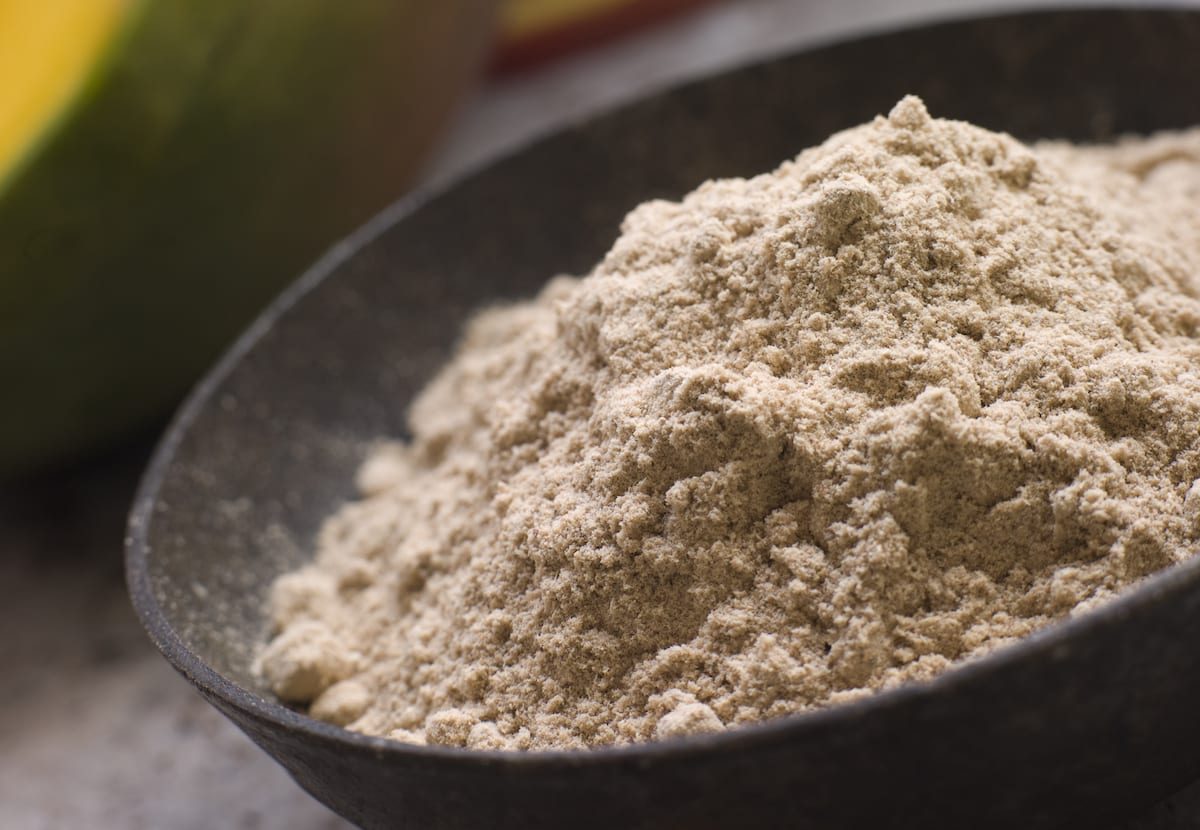
Want sourness without tamarind’s dark color? That’s the job of mango powder, or amchur: unripe mango that’s been sliced, dried and ground into a pale powder. It’s one of the two main sour ingredients in North Indian cooking, and it’s what gives chaat masala its tang.1 Good amchur tastes tart and a little fruity, closer to green apple than to ripe mango. Below: how it’s made, the Indian standard that defines it, and how cooks use it.
At a glance
| Botanical source | Mangifera indica L. |
| Plant family | Anacardiaceae |
| Part used | Unripe fruit, peeled, sliced, dried and ground |
| Native range of mango | Assam to southern Yunnan, China, per Kew |
| Names | Amchur, also written aamchoor (Hindi) |
| Taste | Sour, with a subtle resin-like note; much weaker than tamarind |
| Source of sourness | Citric acid and related compounds2 |
| Indian standard | IS 13242:1991: minimum acidity 2.0% as citric acid (our reading of a partly garbled scan); no added salt, starch, color or preservatives3 |
| Main uses | North Indian vegetable dishes, tikka and tandoori mixes, chaat masala |
Measured values
5 figures, sourced| Measure | Value | Scope | Source |
|---|---|---|---|
| Moisture, maximum Limit | 10.0 % by mass | IS 13242:1991 (reaffirmed 2012), amchur powderOur reading of a partly garbled scan, as the page states | law.resource.org |
| Total ash, maximum Limit | 4.8 % by mass | IS 13242:1991 (reaffirmed 2012), amchur powderOur reading of a partly garbled scan, as the page states | law.resource.org |
| Acid-insoluble ash, maximum Limit | 1.0 % by mass | IS 13242:1991 (reaffirmed 2012), amchur powderOur reading of a partly garbled scan, as the page states | law.resource.org |
| Crude fiber, maximum Limit | 3.5 % by mass | IS 13242:1991 (reaffirmed 2012), amchur powderOur reading of a partly garbled scan, as the page states | law.resource.org |
| Acidity as anhydrous citric acid, minimum Limit | 2.0 % by mass | IS 13242:1991 (reaffirmed 2012), amchur powderOur reading of a partly garbled scan, as the page states | law.resource.org |
Each figure is quoted as its source states it, with the samples or standard it applies to. Where sources differ, both are shown; nothing is averaged. All measured values
What mango powder is
The Bureau of Indian Standards defines amchur as the powder made by grinding peeled, clean, dried slices of raw mango, and notes in its foreword that it’s generally made from unripe, wind-fallen sour mangoes. In practice, the stone comes out, and the fruit is sliced, dried and ground to a pale gray powder. The dried slices sold before grinding fall outside the standard.3
Katzer notes that in Hindi, am is the fresh fruit and only amchur (also transcribed aamchoor) means the dried spice.2 You’ll often see chur glossed as “powder,” but none of the sources we opened confirmed it.
Where mango comes from
The mango’s native range runs from Assam to southern Yunnan in China, including the eastern Himalaya, Myanmar and Thailand. Katzer notes that wild mango trees are known only from northeastern India and Burma, which makes it plausible the species evolved there. He also writes that the English word came from Tamil and was carried to the West by Portuguese sailors.2 We couldn’t trace the often-quoted figure of 4,000 years of mango cultivation, or the idea that amchur itself is ancient, to a source.
Flavor and the chemistry behind it
Katzer describes unripe mango as sour and astringent with a slight resinous overtone, and the powder as much weaker than tamarind, with a subtle, resin-like taste. He credits the sourness to citric acid and related compounds.2 The Indian standard sets a minimum acidity, measured as anhydrous citric acid, of 2.0% by mass.3 Good amchur tastes tart and a little fruity, closer to green apple than to ripe mango.
How mango powder is used
North India. Amchur is used a lot in northern India and isn’t common elsewhere. Cooks use it in place of tamarind, the other main sour ingredient in Indian cooking, mostly when they want just a hint of tartness or when tamarind’s dark color would show. It’s more popular with vegetables than meat, but it’s common in tikka spice mixtures, and in tandoori marinades Katzer credits it with tenderizing the meat as well as souring it.2 See tandoori masala and tikka masala.
Chaat masala. Amchur is one of four ingredients shared by the two chaat masala recipes compared on our chaat masala page, and Tarla Dalal credits it with the blend’s tangy taste.1 It’s a core ingredient, but not the main one. In Gulf News’s recipe, amchur, black salt and roasted cumin go in at a tablespoon each.4
Technique
Stir amchur in toward the end of cooking or sprinkle it over a finished dish, a little at a time, tasting as you go. We found no measurement of the best timing; that’s just how cooks tend to use it.
Buying and quality
India’s standard, IS 13242:1991 (reaffirmed 2012), sets these limits for amchur powder.3 The scanned copy we read is partly garbled, so these values are our best reading of it:
| Requirement | Limit |
|---|---|
| Moisture, % by mass, maximum | 10.0 |
| Total ash, % by mass, maximum | 4.8 |
| Acid-insoluble ash, % by mass, maximum | 1.0 |
| Crude fiber, % by mass, maximum | 3.5 |
| Acidity as anhydrous citric acid, % by mass, minimum | 2.0 |
The standard also says the powder must be free of musty odor, added coloring, flavoring and preservatives, and added salt or starch.3 So if a label lists anything beyond mango, take note. That’s our takeaway from the Indian standard, not a rule for retail packs sold outside India.
Storage
We didn’t find a published shelf-life figure for mango powder. Keep it in a sealed jar away from humidity. Clumping means it’s picked up moisture, and if it no longer tastes clearly sour, it’s faded.
Health claims
You may read that a serving of mango powder supplies set percentages of daily vitamin A, vitamin C, calcium, potassium or fiber, or that it treats or prevents scurvy, tooth decay or eye disease. We couldn’t trace any of that to a source. We didn’t find a nutrient analysis of amchur in a government database, and we’re not making health claims for it. Mango belongs to the Anacardiaceae, but none of the sources we opened address allergy to the dried powder.
Substitutes and comparisons
Tamarind is the swap Katzer names.2 Lemon or lime juice, sumac, kokum and loomi can also add sourness, each with its own flavor and color. See mango powder substitutes for the ranked list, chaat masala substitutes and chaat masala vs. garam masala. If a dish has gone too sour, see too much tamarind.
Footnotes
-
Tarla Dalal, “Chaat Masala”, TarlaDalal.com. cdn.tarladalal.com · Publication ↩ ↩2
-
Gernot Katzer, “Mango”, Gernot Katzer’s Spice Pages. gernot-katzers-spice-pages.com · Reference work ↩ ↩2 ↩3 ↩4 ↩5 ↩6
-
IS 13242:1991, Amchur, Raw Mango (Mangifera indica Linn) Powder, Specification, Bureau of Indian Standards. law.resource.org · Standard ↩ ↩2 ↩3 ↩4 ↩5
-
Anupa Kurian, “Homemade Indian chaat masala”, Gulf News, 2022. gulfnews.com · Publication ↩
Also drawn on
- Mangifera indica L., Plants of the World Online, Royal Botanic Gardens, Kew. powo.science.kew.org