Cooking · Dish guide
The Best Spices for Mac and Cheese: Mustard, Cayenne and What Else Works
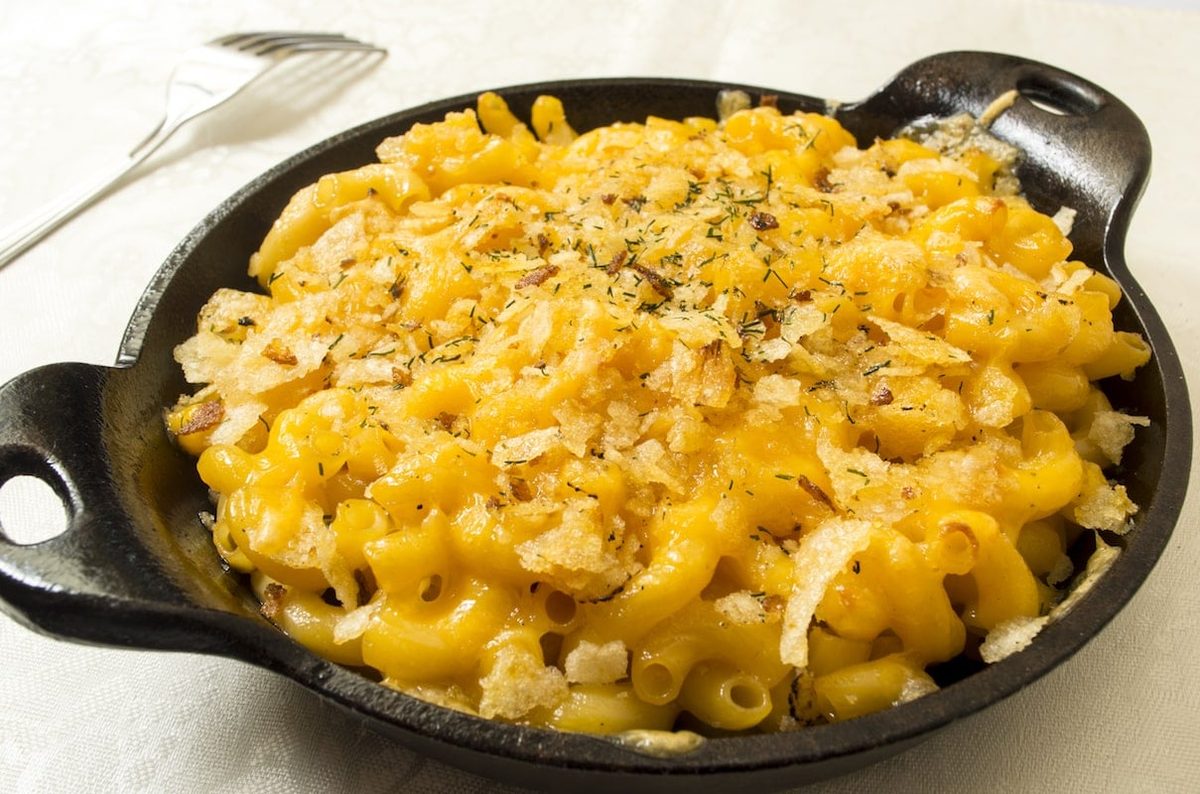
Start with dry mustard and cayenne. Homemade mac and cheese is really a cheese sauce, and that’s the classic cheese-sauce pair. America’s Test Kitchen’s classic baked macaroni and cheese whisks 1 1/2 teaspoons of dry mustard and 1/4 teaspoon of cayenne into the butter and flour before the milk and cheese go in.1 From there, white pepper, paprika, jalapeño, garlic and Italian herbs each take the dish somewhere different.
At a glance
| Spice | Job | Named example |
|---|---|---|
| Dry mustard | Sharpness that brightens the cheese | 1 1/2 tsp in ATK’s classic1 |
| Cayenne | Background heat | 1/4 tsp in ATK’s classic1 |
| White pepper | Pepper heat without dark specks | Often suggested for cream sauces2 |
| Jalapeño | Fresh green heat | Two diced, plus pickled, in Sargent’s recipe3 |
| Paprika or smoked paprika | Red color; smoke if smoked | Common topping (no named amount found) |
| Chili powder | Chile, cumin, oregano and garlic in one jar | No named amount4 |
| Garlic | Savory depth | One clove in Sargent’s recipe3 |
| Basil, oregano, marjoram | Herbal, Italian direction | No named amount56 |
Two recipes side by side
| ATK, Classic Macaroni and Cheese1 | Ryan Sargent, Jalapeño Mac and Cheese, House & Home (serves 4)3 | |
|---|---|---|
| Mustard | 1 1/2 tsp dry mustard | 1 tsp Dijon mustard |
| Heat | 1/4 tsp cayenne | 2 fresh jalapeños, seeded and diced, plus 1/4 cup pickled jalapeños |
| Aromatics | none | 1 shallot, 1 garlic clove |
| Pepper and salt | Black pepper and kosher salt | |
| Cheese | Pepper Jack or jalapeño Havarti, extra-old white cheddar, Parmigiano-Reggiano, herb and garlic cream cheese | |
| Baked | Yes | Yes, 425°F, 20 to 25 minutes |
These are the authors’ own recipes, not a house standard. Both build the heat and sharpness into the sauce itself, so nothing gets added at the table.
Mustard: the classic
Mustard shows up in all three cheese-sauce recipes here. ATK whisks dry mustard into the roux with the cayenne,1 Catherine Lamb whisks 1 teaspoon of English mustard powder and the cayenne into the roux for her Welsh rarebit (another cheese sauce) for Food52,7 and Sargent uses a teaspoon of Dijon.3 McCormick describes ground mustard as sharp, hot and slightly bitter, and warns that more than a small amount can take over and drown out other flavors.8
As the recipes show, dry powder and prepared mustard both work. You’ll often read that mustard’s tang cuts the richness of the cheese. That’s a fair way to describe how it tastes, but we found no source that tests it. Mustard is also said to have a long history in mac and cheese, though we didn’t find a historical recipe to show it. See mustard powder uses.
Cayenne and other chile heat
Cayenne
ATK uses 1/4 teaspoon of cayenne in its sauce,1 and Lamb puts it in her rarebit roux too.7 You can also scatter cayenne’s red flecks over a baked dish for color. That’s about looks, not flavor. See cayenne pepper uses.
Jalapeño
Sargent’s recipe cooks half the diced fresh jalapeños with the shallot at the start. The rest go in just before the pasta hits the baking dish, along with pickled jalapeños.3 You get two kinds of jalapeño flavor that way: cooked and bright.
Is jalapeño milder than cayenne? Usually, but it depends on the variety and how much you use. Dave DeWitt’s heat scale, which he calls necessarily approximate, puts ‘Cayenne Long’ at 30,000 to 50,000 Scoville heat units and ‘Early Jalapeño’ at 5,000 to 15,000. It also lists ‘TAM Mild Jalapeño’ and ‘Cayenne Large Red Thick’ together at 2,500 to 5,000.9 Two whole jalapeños in a pan of mac and cheese can easily bring more heat than a quarter teaspoon of cayenne. Jalapeño powder is the dried option.
Chili powder
American chili powder is a blend, not a single pepper. The USDA’s purchasing specification lists ground chili pepper, cumin, oregano, salt and garlic powder.4 It doesn’t name a chile variety, so the claim that chili powder is made from ancho holds for some blends but isn’t a rule. The cumin and oregano push mac and cheese toward chili-mac territory. See paprika vs. chili powder and ancho powder.
White pepper
White pepper is black pepper with the dark outer part of the fruit taken off. Katzer notes it’s often suggested for cream-based sauces where black pepper would spoil the color,2 and a pale cheese sauce is exactly that. The flavor is a little different too: America’s Test Kitchen explains that stripping the skin removes much of the pepper’s volatile oils and aroma compounds.10 If you like the specks, use black pepper; Sargent’s recipe does.3 See white pepper vs. black pepper.
Paprika
Most paprika brings more color than heat. Smoked paprika adds flavor as well. Spain’s Pimentón de la Vera is smoke-dried, and its official specification describes a smoky, intense and penetrating flavor and aroma.11 A dusting over baked mac and cheese, mixed into the breadcrumbs, is a familiar finish, but we didn’t find a named recipe with an amount. See smoked paprika.
Garlic
Sargent’s recipe minces one garlic clove and cooks it with the shallot and jalapeño.3 If you add fresh garlic to the butter before the flour, mind America’s Test Kitchen’s warning: garlic cooked too long or too hot can burn and turn acrid and bitter.12 For garlic powder, ATK recommends hydrating it in a little water first, since powder straight from the jar hasn’t developed its full flavor.13 Whisking it into the milk is one way to do that. See garlic powder.
Italian herbs
Basil and oregano both have a track record with cheese and pasta. Italian cooks use basil leaves in pizzas, pasta, chicken and cheese dishes, and oregano is essential in Italian pizza and pasta sauces. Marjoram can stand in for oregano; see marjoram. None of the mac and cheese recipes above uses these herbs, so the amount is up to you. A premixed Italian seasoning covers all three. Dried herbs can go into the sauce, while fresh basil is best torn over the top at the end.
When to add each seasoning
- In the roux, with the flour: dry mustard and cayenne.17
- With the aromatics: fresh garlic, shallot and some of the jalapeño.3
- Folded in at the end: pickled or fresh jalapeños, Dijon, salt and pepper to taste.3
- On top: paprika, breadcrumbs and fresh herbs.
Related
- Spices for grilled cheese
- Mustard powder uses and cayenne pepper uses
- White pepper vs. black pepper
- How long do spices last?
- Dried herbs vs. fresh
- The master list of herbs and spices
Footnotes
-
“Classic Macaroni and Cheese”, Cook’s Illustrated, America’s Test Kitchen, 2012. americastestkitchen.com · Publication ↩ ↩2 ↩3 ↩4 ↩5 ↩6 ↩7
-
Gernot Katzer, “Black Pepper (Piper nigrum L.)”, Gernot Katzer’s Spice Pages. gernot-katzers-spice-pages.com · Reference work ↩ ↩2
-
Ryan Sargent, “Jalapeño Mac And Cheese”, House & Home, 2021. houseandhome.com · Publication ↩ ↩2 ↩3 ↩4 ↩5 ↩6 ↩7 ↩8 ↩9
-
Commercial Item Description A-A-20001C, Spices and Spice Blends, USDA Agricultural Marketing Service, 2023. ams.usda.gov · Regulator ↩ ↩2
-
Aguilar, Pham and Oyen, “Ocimum basilicum”, PROSEA. uses.plantnet-project.org · Reference work ↩
-
Anoushka Pant, “Oregano”, Encyclopaedia Britannica. britannica.com · Reference work ↩
-
Catherine Lamb, “Welsh Rarebit”, Food52, 2017. food52.com · Publication ↩ ↩2 ↩3
-
“About Ground Mustard: Uses, Pairings and Substitutes”, McCormick, 2025. mccormick.com · Merchant ↩
-
Dave DeWitt, “Heat Scale Updated”, Fiery Foods & Barbecue Central, 2008. fieryfoodscentral.com · Publication ↩
-
“Substituting Black Pepper for White Pepper”, America’s Test Kitchen. americastestkitchen.com · Publication ↩
-
Pimentón de la Vera PDO product specification. assets.publishing.service.gov.uk · Regulator ↩
-
Liz Bomze, “Why You Should Wait to Add Garlic”, America’s Test Kitchen, 2023. americastestkitchen.com · Publication ↩
-
Carolyn Grillo, “For Great Garlic Bread, Hydrate Your Garlic Powder First”, America’s Test Kitchen, 2021. americastestkitchen.com · Publication ↩
Also drawn on
- Black pepper (Britannica Editors, revised by Sohini Dasgupta, updated 11 Sep 2026), Encyclopaedia Britannica. britannica.com