Spice Substitutes · Substitutes
Summer Savory Substitutes, Ranked by the Job Savory Is Doing
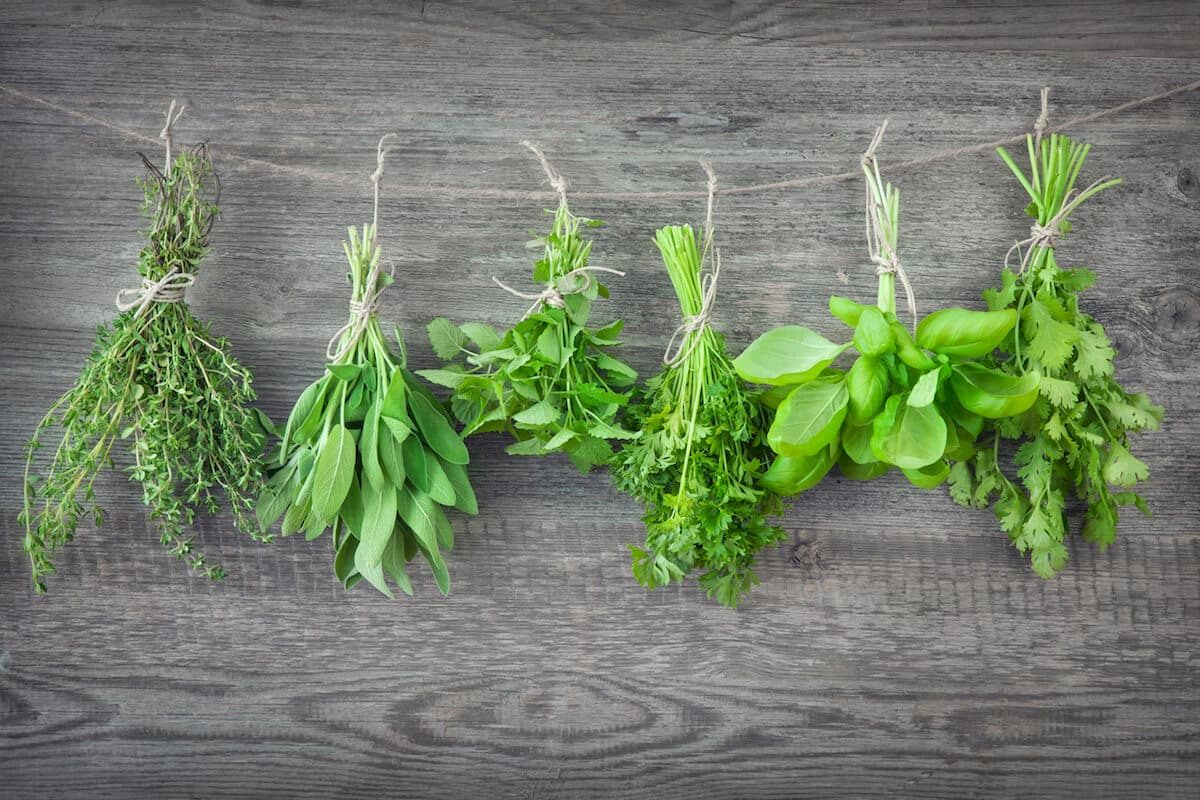
Out of summer savory? Reach for thyme and sage, two parts to one. That’s the only swap we found that’s actually been taste-tested: America’s Test Kitchen’s tasters called the combination nearly identical to savory in stuffing and chicken soup. Thyme alone works too. For a bean pot, winter savory is the closest relative, though it tastes harsher.
Quick answer
| What savory is doing | Best substitute | Starting amount, per 3 parts savory | Treatment |
|---|---|---|---|
| Stuffing, poultry, chicken soup | Fresh thyme plus fresh sage | 2 parts thyme + 1 part sage | Attributed |
| Same job, thyme only | Thyme | 3 parts | Method |
| Bean and lentil dishes | Thyme, or winter savory | 3 parts thyme; 2 parts winter savory | Method |
| One herb in a dried blend for roasts or vegetables | Herbes de Provence | 3 parts | Method |
| A lighter dish, added near the end | Marjoram | 3 parts | Method |
| A sharper, more pungent note | Oregano | 1 to 2 parts dried | Method |
How the ratios on this page are labeled
Every ratio carries one of four labels.
- Computed: based on a measurable physical relationship.
- Attributed: a named source publishes this ratio. We quote it as theirs.
- Disputed: named sources give different answers to the same swap. You get each one, side by side.
- Method: our starting point, based on how the two compare. Taste and adjust.
One ratio here comes from a published tasting test. The rest are starting points.
If savory is seasoning stuffing, poultry or soup
1. Thyme and sage, two to one
America’s Test Kitchen tasted savory and found that, even though it’s in the mint family, most of its tasters picked up a stronger resemblance to thyme and sage.1 ATK’s test cooks then replaced chopped fresh summer savory with fresh thyme and fresh sage in sausage stuffing and chicken soup, and tasters said the combination was nearly identical to savory.1
The chemistry explains half of that: thyme shares savory’s main flavor compounds.23 Sage brings something different, and stuffings are among its main uses.4
Ratio (Attributed): ATK says to replace summer savory with 2 parts fresh thyme to 1 part fresh sage.1 In its test, 3 teaspoons of savory became 2 teaspoons of thyme and 1 of sage, so the total volume stays the same.
Dried thyme and sage: ATK tested fresh herbs only. If yours are dried, keep the same 2:1 proportion and the same total volume as the dried savory called for. In ATK’s separate dried-herb tests, dried thyme and sage both held up reasonably well in long-cooked dishes with liquid.5
2. Thyme alone
Thyme is one of the two herbs ATK’s tasters named,1 and it shares savory’s main flavor compounds.23 It’s also a hardy herb that ATK groups with the ones added early in cooking.6 Going the other way, The Spice House lists summer savory among its favorite substitutes for thyme.7
Ratio (Method): Start with the same amount as the savory and taste.
3. Sage alone
Sage on its own gives you the stuffing flavor but not savory’s thyme-like side, and it’s the stronger herb. The University of Delaware’s guide puts sage in its strong group and savory in its medium group.8
Ratio (Method): Start with half as much sage as savory and taste.
If savory is seasoning beans or lentils
Savory’s German name, Bohnenkraut, ties it to beans,9 and Monticello’s notes on winter savory list bean dishes among its uses.10 Any of the substitutes above will work in a bean pot. If you’ve got winter savory, that’s the closest relative.
Winter savory
Winter savory, Satureja montana, is a perennial in the same genus.11 Britannica says you can use it much like summer savory, but it tastes harsher and more bitter.12 ATK describes summer savory as the more delicate of the two, with winter savory coarser in texture.1
Ratio (Method): Winter savory is harsher, so start with about two thirds as much and add more after tasting.
If savory is one herb in a dried blend
Herbes de Provence
The French Label Rouge specification for herbes de Provence calls for 26 to 27 percent savory, with the same share of rosemary and oregano and 19 percent thyme.13 So it brings savory back, along with a strong dose of rosemary.
Ratio (Method): Start with the same amount and taste, keeping in mind that rosemary and oregano make up most of the rest.
If the dish is light or quickly cooked
Marjoram
The University of Delaware’s guide puts marjoram and savory in the same medium-strength group, and its general advice for long-simmered dishes is to add herbs in the last 45 minutes.8
Ratio (Method): Start with the same amount, stirred in toward the end.
If you want a sharper note
Oregano
Oregano is warm and pungent.14
Ratio (Method): Dried oregano is more assertive than dried savory, so start with a third to two thirds as much and taste.
What isn’t known
- ATK’s 2:1 thyme and sage blend is the only tested swap we found, and it was tested with fresh herbs in two dishes.
- Fines herbes is sometimes said to contain both thyme and savory. Britannica lists its usual herbs as parsley, chives, tarragon and chervil.15 The French blend that has both is herbes de Provence.13
- Thyme and mint, and hyssop, also get suggested as savory substitutes. We found no source for either.
- No source compares how marjoram and savory hold up in long cooking.
Related
- Summer savory, cooking with summer savory and summer savory uses
- Summer savory vs. winter savory and winter savory substitutes
- Thyme, sage, winter savory, marjoram and oregano
- Herbes de Provence, poultry seasoning and fines herbes
- Thyme substitutes and sage substitutes
Footnotes
-
“Cooking with Savory”, America’s Test Kitchen. americastestkitchen.com · Publication ↩ ↩2 ↩3 ↩4 ↩5
-
S.H. Widodo, Thymus vulgaris, Plant Resources of South-East Asia (PROSEA). uses.plantnet-project.org · Reference work ↩ ↩2
-
Fierascu et al., “Phytochemical Profile and Biological Activities of Satureja hortensis L.”, Molecules, 2018. mdpi.com · Peer-reviewed ↩ ↩2
-
U.A. Dasuki, Salvia officinalis, Plant Resources of South-East Asia (PROSEA). uses.plantnet-project.org · Reference work ↩
-
“Science: Substituting Dried Herbs for Fresh”, America’s Test Kitchen. americastestkitchen.com · Publication ↩
-
Liz Bomze, “Our Guide to Fresh Herbs”, America’s Test Kitchen, 2019. americastestkitchen.com · Publication ↩
-
“The 11 Best Thyme Substitutes”, The Spice House, 2018. thespicehouse.com · Merchant ↩
-
“Using Herbs and Spices”, University of Delaware Cooperative Extension, 2025. udel.edu · Reference work ↩ ↩2
-
“Winter Savory”, Thomas Jefferson Foundation, Monticello. monticello.org · Reference work ↩
-
Satureja montana L., Plants of the World Online, Royal Botanic Gardens, Kew. powo.science.kew.org · Reference work ↩
-
“Savory”, Encyclopaedia Britannica. britannica.com · Reference work ↩
-
Label Rouge “Herbes de Provence” (LA 02/03), specification modification request, INAO, 2014. extranet.inao.gouv.fr · Regulator ↩ ↩2
-
“Oregano”, Encyclopaedia Britannica. britannica.com · Reference work ↩
-
“Fines herbes”, Encyclopaedia Britannica. britannica.com · Reference work ↩