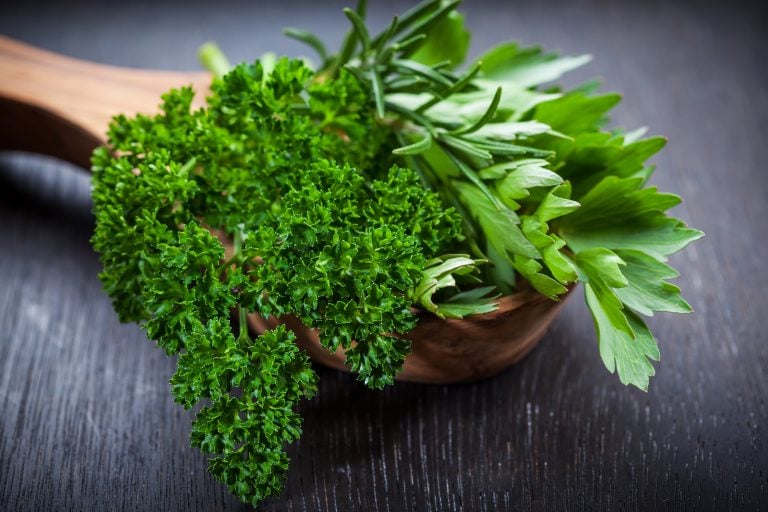
Italian parsley and curly parsley have been the quintessential garnishing herbs in Western cuisine. There was a time not too long ago when a chopped parsley garnish seemed essential for fine dining dishes. These days, most cooks agree that garnishes should do more than make your dish pretty. When it comes to the two parsleys, which you choose can have a significant impact on the flavor and visual appeal of the food that you are serving. Compare the two in the SPICEography Showdown below.
Year: 2018
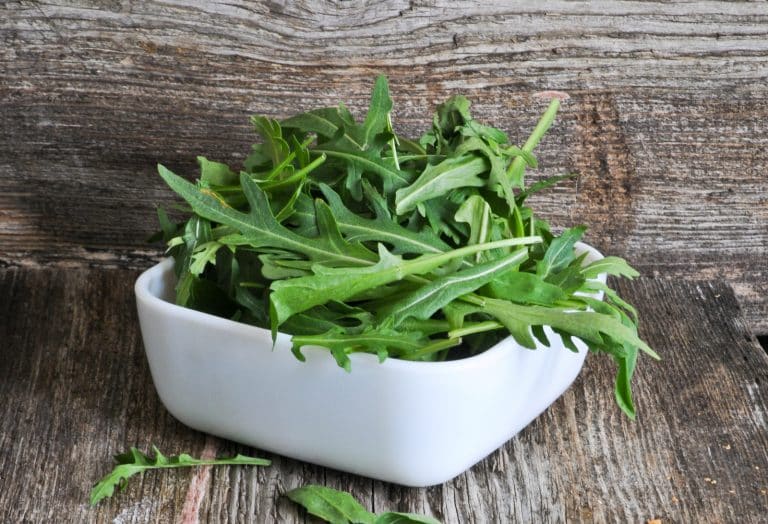
Arugula Vs. Spinach: SPICEography Showdown
Arugula and spinach are two healthy and versatile greens that you can use raw or cooked. While they have similarities, it is best not to swap them out in a recipe without learning more about their characteristics. Learn more about how arugula compares to spinach in the SPICEography Showdown below.

What’s A Good Watercress Substitute?
Watercress is a nutritious leafy green and can be a flavorful addition to a salad or soup if you can find it. The problem is that it is not one of the most popular salad greens. Whether you are having trouble finding it or just now realized that you were out and that you need it, you have come to the right place. Consider the following watercress substitutes:
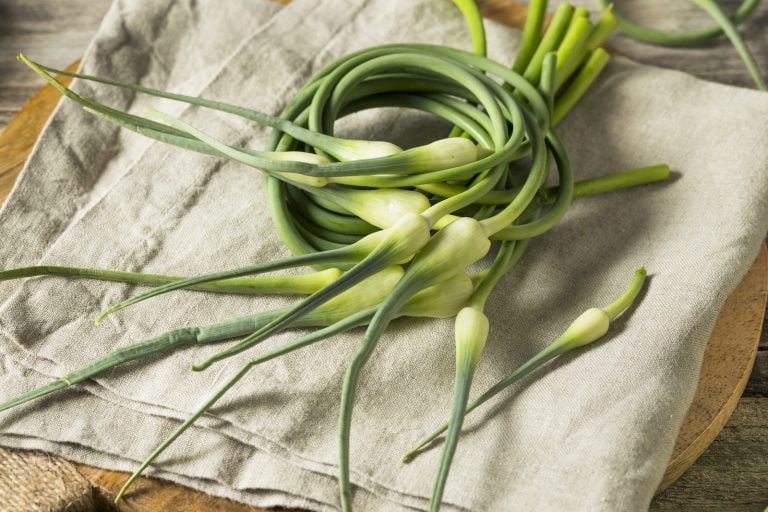
Garlic Scapes: A Unique Source Of Garlic Flavor
Garlic scapes are the green shoots of the garlic plant. Garlic has been used as food for thousands of years. It is one of the first plants to be cultivated and the Ancient Egyptians revered it. The Egyptians used garlic to feed workers, and a shortage of garlic was known to cause work stoppages among the slaves who built the pyramids. The believed that garlic enhanced the laborer’s capacity for work. Garlic was among the items found by excavators in Tutankhamun’s tomb in the early 20th century. The Papyrus Ebers — which dates back to 1550 BCE — shows that garlic was prescribed in Ancient Egypt. It was used to treat abnormal growths and problems involving blood circulation.
The Ancient Greeks were also believed to be fans of garlic as evidenced by archaeologist’s findings in Crete. Greek temples dating back to 1400 BCE contained garlic. The Greeks also believed that garlic could improve a worker’s strength and stamina. They added it to the diets of soldiers who were going into battle. It may have been provided to athletes in the first Olympics before they competed.
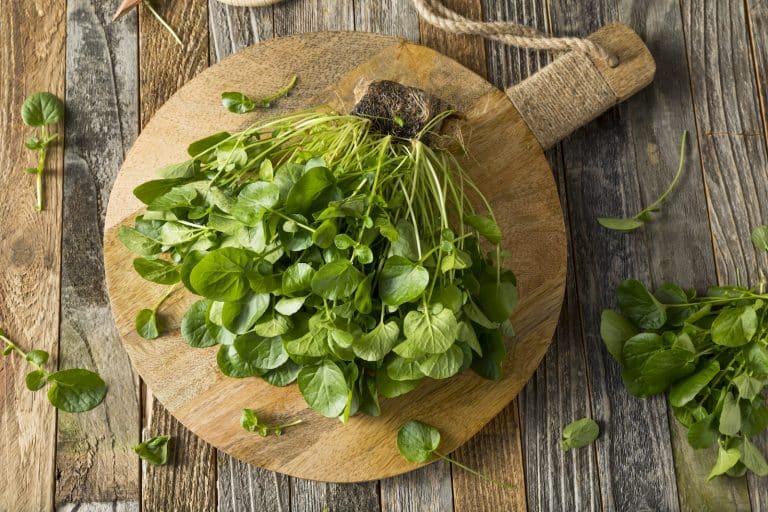
Watercress: The Original Leafy Green
Watercress is an aquatic herb that came initially from Eurasia, but you can now find it growing all over North America. It belongs to the Brassicaceae family to which cabbage and mustard also belong.
Watercress is believed to be one of the first leafy vegetables consumed by humans.
The Ancient Egyptians used watercress along with the Ancient Greeks and Romans used. Hippocrates grew the herb and used it as a treatment for blood disorders. In the First century, it was documented by Dioscorides in his Materia Medica. Dioscorides believed watercress to be an aphrodisiac. At the time, watercress was a culinary herb in Asia. Other mentions of it occurred in the 11th century where it showed up in an Anglo-Saxon herbarium. In the 16th century, botanist Leonhart Fuchs brought it to light and it would become a staple medicinal herb throughout Europe. Up until the Renaissance period, Europeans used the watercress mainly to freshen the breath and as a medicine.

Pineapple Sage: Sage With A Hint Of Tropical Fruit
Pineapple sage is known by other various names, including its botanical name Salvia elegans. It is called tangerine sage in some places. It has been cultivated since 1870 and was given the name Salvia rutilansas in 1873, a name which has now been largely forgotten. The herb is native to Central America where it grows wild in the pine-oak forests of Mexico and Guatemala. In Mexico, some refer to it as mirto or yerba del burro. The plant is not related to pineapples despite its common name and distinctive aroma; however, it is related to common sage and is in the mint family.
Pineapple sage is still a popular herb as far as Mexican folk medicine is concerned. Practitioners of traditional Mexican medicine use it as a sedative and to lower blood pressure.

Thankuni: The Longevity Herb
Thankuni is a creeping perennial that belongs to the Apiaceae family, and that goes by several other names. It is a relative of various other better-known herbs such as parsley and cilantro. Its aliases include its botanical name, Centella asiatica as well as pennywort. While it has been naturalized to other parts of the world, it grows primarily in Southeast Asia and prefers humid and swampy climates. In some parts of the world, many know thankuni by another alias: gotu kola.
The kola part of the name may seem to imply a relationship with the kola nut, but the kola nut — which is the flavoring in cola sodas — comes from an entirely different plant.
Indians and Chinese have used this herb for millennia. In Ayurveda, it is considered a kind of anxiolytic. You can find thankuni documented in ancient Sanskrit texts as a remedy for cardiovascular illness as well as for respiratory ailments like bronchitis. Chinese legend has it that a herbalist who consumed thankuni lived for over 250 years. The herb is still used in traditional Chinese medicine. Thankuni became popular in Sri Lanka as well when people noticed that elephants seemed to be attracted to it. Elephants are known to have long lives.

What’s A Good Milk Thistle Substitute?
Milk thistle is considered a weed by many but has a long history of being used for food and as medicine. Milk thistle is most famous for its positive effect on liver health. It is also something that you should consider when seeking out an alternative. Your replacement should be …