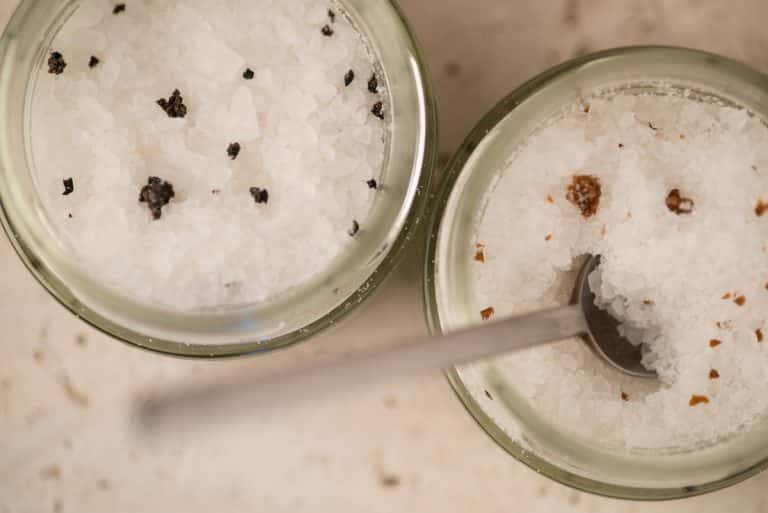
truffle salt

Truffle Salt: An Affordable Truffle Alternative

Truffle salt is a little different from most spice blends in that it has only been around for a few years. The combination of truffles with sea salt was first marketed by an Italian company called Casina Rossa in 2006. With the Casino Rossa version of the blend, the truffles come from Abruzzo in Italy and the sea salt comes from Sicily. Unlike other affordable substitutes for truffles (such as some truffle oils), truffle salt uses real truffles rather than a synthetic alternative.

Of course, neither component of the spice blend is new. Truffles are found within the roots of various trees, including those of the chestnut and hazel trees. Consumption of truffles dates back to the Ancient Egyptians, who prized them. They were consumed by both Greeks and Romans as well. Truffles were viewed as highly nutritious by both civilizations. The flavor and aroma were also considered to be exotic, which made them more valuable among wealthier classes.
Read more

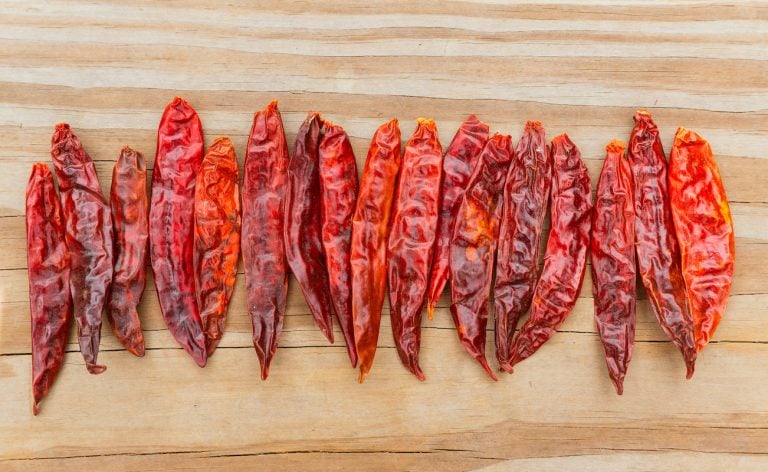
Chile de arbol

Chile de Arbol Powder: Cayenne Pepper’s Mexican Cousin

Like all other chili peppers, chile de arbol originated in what is now Latin America. Christopher Columbus found out about chili peppers while seeking a route to Asia for the black pepper trade. It is believed that chili peppers were being cultivated by Mesoamericans as early as 5000 BC. Along with using them as a seasoning for food, they used chilies to fumigate their houses. Portuguese trade routes are to be credited for the spread of hot peppers throughout the world including in Asia.

Chile de arbol was first documented by a naturalist named Francisco Hernandez, who was also the King of Spain’s court physician. Sent to study the New World, Hernandez compiled 16 volumes on the plants found in Mexico. According to his writings, the name chile de arbol comes from a Nahuatl word and translates to treelike or woody and refers to the fact that the trees have thick stems and branch upward.

Read more

white peppercorns

White Peppercorns: A Milder Version Of Pepper

The history of the white peppercorn is deeply interwoven with that of the black peppercorn since they are both from the same fruit. Black and white peppercorns come from the drupes of the Piper nigrum plant. They differ in that white peppercorns have had the dark skin removed, which alters both the flavor and the appearance of the spice. To make white peppercorns, the drupes are allowed to ripen before being soaked so that the skins can be rubbed off.

For much of human history, pepper has been one of the most important spices. In fact, it could be said that its value is second only to salt. The history of the spice trade is mainly the history of the peppercorn, which includes both black and white pepper. The Piper nigrum plant is native to Southeast Asia and peppercorns were being used by Indian cooks as early as 2000 BCE. The Ancient Egyptians used pepper in when mummifying corpses; peppercorns were stuffed into the mummy of Ramesses II and it is believed to have been used as currency in Ancient Rome.

Read more

licorice root

Licorice Root: The Source Of Much Love…And Hate

Licorice has been used as a medicine since the time of the Ancient Egyptians who chewed it and made tea with it. The Greeks would learn of licorice root from the Scythians and referred to it as Scythian root. Licorice root was used by the Romans as well. The Roman author and naturalist Pliny recommended licorice for clearing the voice and claimed that it could alleviate thirst and hunger. Dioscorides would instruct troops of Alexander the Great to use licorice root for relieving their thirst when they had limited access to water.

It is said that Buddha consumed licorice. Hannibal’s troops enjoyed licorice as they marched over the Alps and it is what blackened the teeth of Ivan the Terrible. The Chinese have used it for thousands of years to treat a variety of ailments. Later on in history, Napoleon would be a fan of licorice root and chewed so much of it that it blackened his teeth.

Read more

Green Peppercorns

Green Peppercorns: A Milder Pepper

Green peppercorns are the same fruit as black peppercorns, both are from the Piper nigrum plant. The difference is that green peppercorns are harvested at a different stage of ripeness. Instead of being dried in the sun like black peppercorns, they are dehydrated quickly to preserve their color. Because they are the same as black peppercorns, much of their history remains the same.

The peppercorn originated in Kerala, an Indian state and is known as the king of spices and was once valuable enough to be used as currency. It is arguably the most commonly used spice in the world after salt.

Pepper is documented in texts from ancient Greece and Rome, which means that the trade between India and the western world is truly an ancient one. The early pepper trade from 1,000 BCE saw traders from Arabia controlling the spice trade to preserve a monopoly. Those routes continued to be controlled by Arab traders well into Medieval times. The Venetians held a monopoly on shipping lines in the Mediterranean and could set their own prices. At this point in history, pepper was held in particularly high regard and was costly to ship, which made it a luxury item in Europe.

Read more

black mustard seeds

Black Mustard Seeds: The Most Pungent Mustard Seed

It is believed that there are over 40 different mustard varieties but the varieties most familiar to people in the western world are categorized simply as black, brown, and white mustard. Food coloring or turmeric is added to the white variety to make what we know as yellow mustard. Black mustard seeds most likely come from the Mediterranean region, though in modern times they are mainly used in India. While mustard’s history goes all the way back to Ancient Egypt, the prepared version of it is a Roman invention. The ancient Romans ground mustard seeds and used them to make a paste with wine that was similar to the prepared mustard we use today.

Read more

Orris Root

Orris Root: The Perfume Spice

Orris root is made from the rhizome of the iris flower, which is best known for its colorful blooms. The flower from which orris root comes is native to the Mediterranean region, but it can also be found in parts of Asia as well as in North Africa.

Orris root has been used as far back as ancient Egypt. The Egyptians utilized it as a perfume and for incense. It was also used in ancient Greece and in ancient Rome as well. It was considered a valuable medicine by Dioscorides and by Pliny. Even though it had medical applications, it was primarily used to make perfumes. It was often combined with anise and the scent applied to linens.

The iris plants from which orris root is derived were cultivated in the region around Florence, Italy in the Middle Ages. The traditional preparation involved digging the roots up in August and peeling them. The peeled roots would be dried until they appeared to be chalky. The drying process for orris root can take five years or longer.

Read more

goji berries

Goji Berries: An Ancient Chinese Superfood

Goji berries are native to Asia, though some species of the plant can be found growing in North America. Goji berries belong to the nightshade family, which means that they are related to tomatoes and eggplant. They have a long history of use in China. According to an early legend regarding the goji berry and its value, a doctor more than 2,000 years ago visited a village that consisted mostly of centenarians.

After observing them for a time, the doctor noticed that the residents who lived the longest also had homes closest to the wells were goji berry trees grew. As the fruits ripened, they would fall off into the water and their nutrients would be infused into it. Villagers who lived near the wells would drink the water and benefit from its nutrients. There are multiple variations of this legend.

Documentation of the benefits of goji berries begins with a book written by a Chinese emperor named Shen Nong in the year 250 BCE that is believed to be the oldest Chinese book on herbs and medicine. The book was named Shen Nong Ben Cao Jing and was supposed to contain all of the emperor’s knowledge on the subject of agriculture. There is another important Chinese book written by Li Shi-Zhen in the 16th century that also includes important information on the subject of the goji berry.

Read more