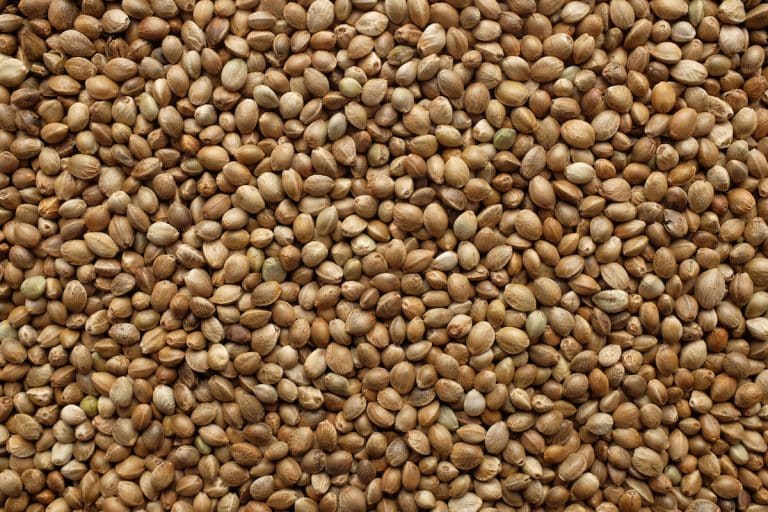
Hemp appears to have originated in Central Asia and then spread throughout the world as people moved from one place to another. There are more hemp varieties in China than there are anywhere else. According to Chinese texts from the Sung Dynasty, the Chinese people were first ordered to grow hemp for fiber in 2800 BCE by Emperor Shen Nung. During this period, people in Northern India were cultivating hemp plants mainly for fiber; however, legends also state that Buddha survived on one hemp seed each day on his path to enlightenment.
Spices
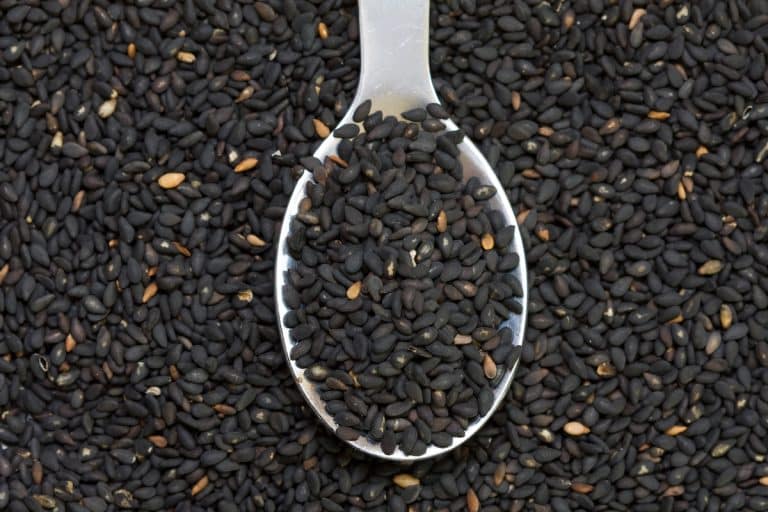
Black Sesame Seeds: A Cholesterol-Fighting Spice From The Far East
Sesame seeds are believed to be one of mankind’s oldest spices and are mentioned in the Assyrian creation myth. There is evidence that sesame seeds were being used by the ancient Chinese people around 5000 BCE. The Chinese used sesame oil as a fuel for lamps and burned it to use the soot for their ink blocks. Other evidence shows the sesame plant being grown in India around 1600 BCE. Historians believe that India is actually where sesame seed plants originated. Specifically, they are thought to come from the Indian Archipelago, also known as the Spice Isles. The Romans also used sesame seeds. In ancient Rome, sesame seeds were ground with cumin to make a spread for use on bread.
By 1500 BCE, sesame seeds were being cultivated in various parts of Africa, including Egypt and Sudan.
In America, sesame seeds arrived by way of African slaves. The slaves referred to sesame seeds as benne seeds and are the reason why sesame seeds show up in many southern dishes.
Like golden sesame seeds, black sesame seeds are unhulled. The fact that they lack a hull gives them a darker appearance than white sesame seeds. White sesame seeds have had their hulls removed thus exposing the inner white part of the seed. Aside from hull or lack thereof, there is no difference between black and white sesame seeds.

Worcestershire Powder: The Indian/British/Texan Condiment
The Worcestershire name refers to the English town in which Worcestershire sauce was first made and sold commercially. The common (but disputed) story behind the origin of this popular condiment is that it originated in India, where a governor of Bengal returned home to England and brought with him a highly spiced Indian sauce. He commissioned two chemists named John Wheeley Lea and William Henry Perrins to replicate it.
The legend states that the two men were unhappy with the early results due to the strong smell. They left the first batch of their experiment in a cellar and a few years later, they happened upon it again. They found that the years of aging had tamed the smell and mellowed the flavors to make it a delicious sauce.

Black Lava Salt: Not Necessarily From Volcanoes
Salt is called pa’akai in the Hawaiian language and making it is one of the islands’ oldest traditions. The word pa’akai can actually be broken down into two separate words: pa’a and kai. Pa’a means solid or firm while kai means saltwater. This means that pa’akai can be translated as …

Hawaiian Sea Salt: The Flavor the Pacific
For centuries, Hawaiians have used sea salt for a variety of purposes including for preserving foods, as a seasoning and as medicine. Long before making contact with Europeans, Hawaiians harvested salt from seawater in saltpans. Originally, Hawaiian salt was harvested in small batches and was white. As demand increased, large-scale production methods were adopted. Large saltpans were excavated into Hawaii’s volcanic clay, which was red due to its high iron ore content. Some of the salt took on a reddish color from the iron ore in the salt pans.
Salt would be one of the first items that native Hawaiians traded with the earliest Europeans to venture to the islands. It played a crucial role in a barter economy. By the 19th century, Hawaii would be the main supplier of salt to the Pacific Northwest. Hawaiian sea salt would be used to cure the salmon caught by fishermen in that part of the US. The salt was also sold to sailors and whaling ships along with salt-cured meat.

Sucanat: A Modern Raw Sugar
Most forms of cane sugar are relatively old, with centuries of cultural tradition behind them. For example, beet sugar has its origin in the Napoleonic wars. The refined sugar with which most of us are familiar is deeply interwoven in Caribbean culture and slave trade’s long legacy.
In contrast, Sucanat is a relatively new product. It was developed in 1976 far from the tropics where sugar cane is grown. Sucanat was developed by a company based in Switzerland. The name comes from sucre de canne naturel , which translates to natural cane sugar. Sucanat is also sometimes referred to as Rapadura. Sucanat is evaporated cane juice, which means that it is not processed like regular cane sugar. The difference is between it and other similar raw sugars is the fact that it is made using a proprietary drying and aeration technique. Whether there are any other significant differences Sucanat and other cane sugars remains unclear.
Its Swiss inventor Albert Yersin wanted to offer a sugar that was healthier for teeth. He was influenced by the studies of Dr. Max-Henri Beguin, a pediatrician who was also from Switzerland. Beguin’s studies suggested that moderate sugar consumption did not increase the rate of tooth decay. His research was performed in India and surrounded the consumption of jaggery.

Szechuan Pepper: A Different Kind Of Heat
Szechuan pepper is sometimes written as Sichuan pepper. Both spellings refer to the same thing—a spice derived from a tree native to various parts of Asia. These trees are also found in the Americas and in Africa but have not been used in cooking in those places. According to legend, Szechuan peppercorns were once reserved solely for the Chinese emperor.
Despite having the word pepper in its name, Szechuan pepper has no relation to black pepper or to chili peppers; instead, the tree from which it comes is called the prickly ash tree and actually falls into the citrus species. Szechuan peppercorns are the dried berries from these trees. Szechuan berries were actually banned by the US government for many years (1968 to 2005) due to fears that they could spread a disease to citrus trees.

Bajan Seasoning: The Barbadian Spice Blend
Bajan seasoning is a combination of herbs and spices that reflect the tastes and culinary traditions of people from Barbados. Bajan is a shortened term Barbadian, which denotes residents of Barbados. Barbados is a small island on the western side of the West Indies.
The ingredients in Bajan seasoning show the island’s long colonial history and its ties to Europe. As such, it has a lot in common with Jamaican jerk seasoning. All of the blend’s constituents originate in Europe, mostly from the Mediterranean region. While some Bajan seasoning blends do contain allspice, many do not. Allspice is native to various parts of the Caribbean and scotch bonnet peppers are from the Americas, but none of the other ingredients originate in the West Indies.
The history of Europe’s influence in Barbados began with a Portuguese explorer named Pedro a Campos. He discovered it on the way to Brazil and gave it the name that it holds to this day. The name Barbados translates to Bearded Ones. Mediterranean herbs and spices used in Bajan cuisine likely emerged from the island’s connection to the Portuguese.