date sugar

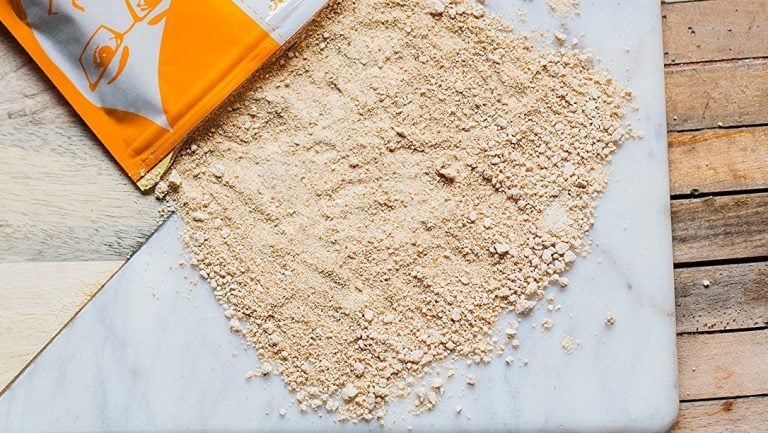
Date Sugar: A Sugar Like No Other

The date palm tree from which dates and date sugar come is thought to have originated in the Persian Gulf. Date palm trees are believed to have been especially abundant in the area between the Nile and Euphrates. They were cultivated in Arabia as early as 4,000 BC. Along with …

Read more

orange zest

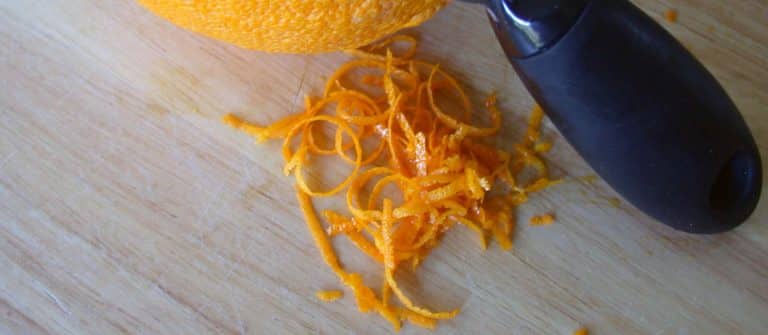
Orange Zest: The Source Of The Orange Aroma

Oranges were first cultivated in in India, then later in China. The orange would reach Europe via the Roman Empire, but the supply would later stop for a few centuries due to the Empire’s decline. The supply would resume by the time Columbus set sail on his voyages of discovery. …

Read more

Baking Soda

Baking Soda: A Leavening Agent With Many Uses

Baking soda has a long history that stretches all the way back to Ancient Egypt. Ancient Egyptians used a product called natron, which contained baking soda. Natron was used for assorted purposes, including for preserving mummies and for cleaning teeth. The first synthetic baking soda was not made until the late in the 18th century when a French chemist named Nicolas Leblanc invented a process for making it with sodium chloride (table salt). In the 19th century, two bakers from New York would utilize Leblanc’s method and use to make baking soda that they sold under the brand name Arm & Hammer.

Today, Arm & Hammer is the best known brand of baking soda in existence. At around the same time, Alfred Bird would create the first baking powder formulation. This formulation would include baking soda along with an acidic ingredient since baking soda has to react with an acid to provide leavening. In Bird’s product, the two ingredients had to be kept separate until they were to be used. In 1856, Eben Norton Horsford would come up with his own baking powder formulation in which the acidic ingredient and baking soda were kept together.

Read more

habanero powder

Habanero Powder: Extreme Spice From The Mayans

The Chinense species to which habanero chilies belong has a history that goes all the way back to 6500 BC. The habanero pepper’s origin is believed by many historians to lie in the Yucatan Peninsula. They were domesticated there so that there were many varieties across South and Central America as well as in the Caribbean islands by 1000 BC.

In the 1900s, the pepper got the Chinense name because taxonomists of the time mistakenly believed that it came from China. The habanero pepper itself is named after the city of Havana in Cuba. More recently, there has been some controversy as to whether it originated in Cuba or in Mexico. Many point to the fact that there is no Mayan name for it. It is a relative of the Scotch bonnet pepper, which is popular in Jamaica and elsewhere in the Caribbean.

Read more

Rock Salt

Rock Salt: The Coarse Version Of Table Salt

For much of human history, salt has been mined from the areas around dry lake beds and in deposits left after ancient seas dried up. These bodies of water all evaporated, leaving their crystallized salt deposits behind. Mined salt is sourced from these deposits. It differs from sea salt in that sea salt is taken from living oceans. While it is usually ground finely for sprinkling onto food as table salt, some of it is kept in a coarse and chunky form that is referred to as rock salt. Rock salt has long been used in many applications that have nothing to do with cooking, but it is still virtually identical to table salt.

Rock salt was used in ancient Egypt to preserve mummies and was in use in ancient China as well. In ancient Greece it would be used as currency and in ancient Rome, it was used to pay soldiers.

Read more

coconut sugar

Coconut Sugar: The Sustainable Sweetener

Coconut sugar has been harvested and used throughout southern Asia for centuries. Some records state that it has been used for as long as 6,000 years. The sugar is obtained from the sap of the coconut flower. The sap is boiled so that the water evaporates from it, which makes the sap becomes thick and concentrated, similar to molasses. Eventually, the sap is reduced to the point that it crystallizes and becomes coconut sugar. This is the method that has been used throughout history.

Coconut sugar has received praise from the likes of Mahatma Gandhi who claimed that its use had the potential to eliminate poverty.

In recent years, the sugar from coconut trees has become a trendy sweetening option and one that is believed by many to have significant health benefits.

Read more

vinegar powder

Vinegar Powder: Tartness In Powder Form

Vinegar powder is best known as the main flavoring in salt and vinegar potato chips. It makes up the vinegar component. Chips with this flavor showed up in the 1950s along with a variety of other food products that relied on a food additive called maltodextrin for their flavor profiles.

Maltodextrin is a starch derivative that has porous particles. The porous nature of the particles makes it good at taking on flavors. Maltodextrin is actually a recent development in the making of powdered vinegar, which actually has a long history. There are mentions of using starch to make a version of vinegar powder that goes all the way back to the year 1615. In Gervase Markham’s 17th century book The English Huswife (old English spelling for housewife). The book contains a variety of recipes and remedies, including one for making powdered vinegar using starch.

Read more

Celery Powder

Celery Powder: A Preservative And A Spice

The term celery powder may refer to ground dehydrated celery or to ground celery seeds. Ground celery seeds come from a different celery variety than the type commonly eaten in the west. It is called smallage and is used in China and Southeast Asia. Celery has been used since the time of the ancient Egyptians. Celery seeds were found in the tomb of King Tutankhamun.

Celery is thought to have originated in the Mediterranean region. The English word celery was first documented in 1664 and was derived from the Greek word selinon.

The first people to use the plant as a seasoning were the ancient Romans. A love of the plant’s properties was passed down to The Italian and the French. Celery would be domesticated during the Middle Ages and today it continues to play a major role in modern European cuisine as well as in the cuisines of various Asian countries, including China and India.

Read more