Preservatives · Profile
Celery Powder: The Seasoning, and the Nitrate Source Behind “Uncured” Meats
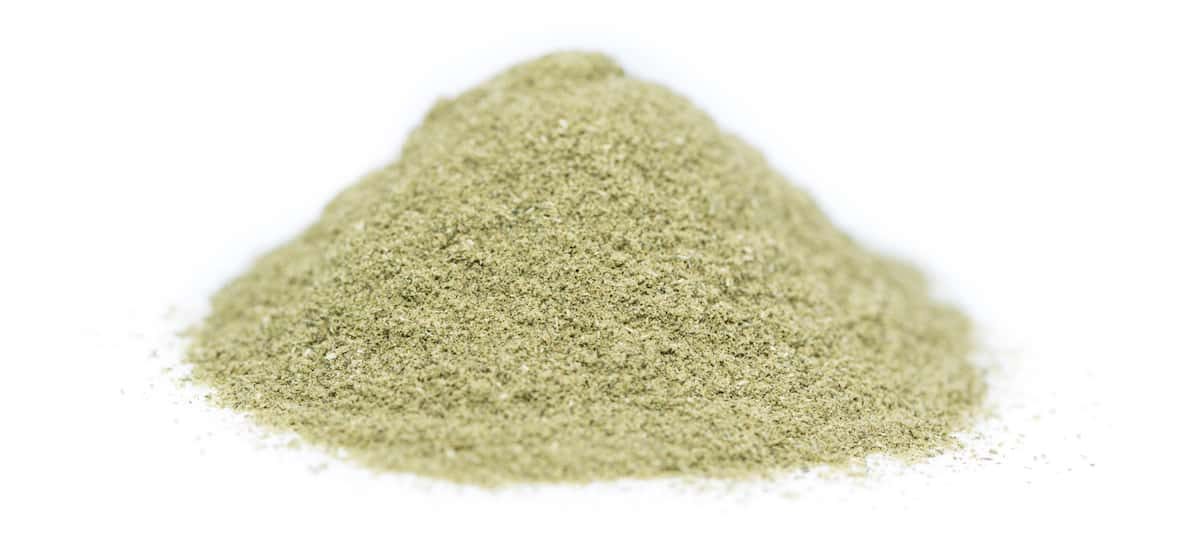
“Celery powder” means two things. In the spice aisle it’s a seasoning: celery, either the dried vegetable or its seed, ground fine. In the meat industry it’s a concentrated source of nitrate that, once converted to nitrite, cures meats sold as natural or “uncured.” Here’s the catch on packages labeled “No Nitrate or Nitrite Added”: the meat has had nitrate or nitrite added, just not from a synthetic source. In 2020 the USDA said it intends to propose banning those claims on celery-cured meat, but as of October 2026 the rule still contains them.
At a glance
| Plant | Apium graveolens L., family Apiaceae; a biennial |
| Native range | Macaronesia to North Africa, and Europe to the western Himalaya |
| Forms sold | Ground dried celery; ground celery seed; for meat processors, celery juice powders and pre-converted celery powder1 |
| Key aroma compounds | Phthalides, including sedanenolide and 3-n-butylphthalide2 |
| Nitrate in celery | 3,151 ppm in celery, per one 2021 paper’s table of vegetables1 |
| US meat labeling | Meats made without added nitrate or nitrite may be labeled “Uncured” and must say “No Nitrate or Nitrite Added” (9 CFR 317.17)3 |
| Allergen labeling | EU: celery is a listed allergen. US: not one of the nine major allergens45 |
Measured values
1 figure, sourced| Measure | Value | Scope | Source |
|---|---|---|---|
| Nitrate | 3,151 ppm | celery (the vegetable, not the powder), one 2021 paper's table of nitrate-rich vegetablesCelery itself, not celery powder; the widely repeated 2.75% powder figure could not be checked | mdpi.com |
Each figure is quoted as its source states it, with the samples or standard it applies to. Where sources differ, both are shown; nothing is averaged. All measured values
Two products, one name
Read the label to know which one you’ve got. A powder made from the vegetable tastes like celery stalk and leaf. One made from seed tastes of celery seed, which is more concentrated and a little bitter. Don’t confuse either with celery salt, which is mostly salt, or with the celery juice powders sold to meat processors, which are made for their nitrate content.
The plant
Celery is Apium graveolens, a biennial of the parsley family (Apiaceae) that grows mostly in temperate regions. Its native range runs from Macaronesia to North Africa and Europe to the western Himalaya, and it’s used for food, medicine and animal feed. A 2019 review narrows its origin to the eastern Mediterranean.2 The English word “celery” is first recorded in 1664 and traces back, through French and Italian, to the Greek sélīnon.
Lots of colorful history gets told about celery: seeds in Tutankhamun’s tomb, the Romans as the first to season with it, domestication in the Middle Ages, and a separate seed variety called smallage grown for China and Southeast Asia. We couldn’t trace any of it to sources we could open, so we’ve left it out.
Flavor and the compounds behind it
Celery’s signature smell comes from a group of compounds called phthalides. A 2019 review names sedanenolide and 3-n-butylphthalide as present in notable amounts and credits a series of phthalide derivatives with celery oil’s typical odor. Celery seed is the most aromatic part, carrying essential oil at about 3% of its dry weight.2 That’s why seed-based powder tastes stronger than powder made from the dried vegetable.
How cooks use it
Celery powder adds celery flavor without any moisture or texture. Try it in potato salad, coleslaw and dressings, dry rubs, soups and stocks, and pickling brines. In a Bloody Mary, the official IBA recipe calls for celery salt, not powder, so if you use powder, add salt separately.6
Celery powder as a curing agent
How it works
Conventional cured meats use sodium nitrite (see curing salt). Products sold as “natural” or “uncured” get their nitrite from vegetables instead, and celery is a big one. Celery juice and its dried powders are high in nitrate, and celery powder is widely used as a vegetable nitrite source in natural and organic meat processing. For curing, the nitrate gets converted to nitrite. That can happen in the meat with a bacterial starter culture, Staphylococcus carnosus being a common one, or before the powder is sold, as a “pre-converted” celery powder that gives more consistent nitrite levels. Chemically derived sodium nitrite and nitrate aren’t allowed in products sold as natural.1
You’ll often see the nitrate content of celery juice powder put at about 2.75%. We couldn’t open the study usually cited for it. The one figure we could check is for celery itself, not the powder: 3,151 parts per million in a 2021 paper’s table of nitrate-rich vegetables.1
What “uncured” means on the label
Under USDA rules, products like bacon and pepperoni can be made without nitrate or nitrite and still carry their usual name if the word “Uncured” comes right before it, in the same size and style of lettering. Standardized products like frankfurters and corned beef get the same treatment.7 They must also say “No Nitrate or Nitrite Added” next to the product name. And unless they’re heat-processed, fermented or dried to set limits, they need a statement that the product isn’t preserved and must be kept refrigerated below 40 °F at all times. These labeling rules don’t apply when the product’s salt content reaches a brine concentration of 10% or more.3
Here’s the catch: meat cured with celery powder has had nitrate or nitrite added, just not from a synthetic source. Food Dive reported in 2020 that FSIS allows these claims on products made with natural nitrate sources like celery salt. The Center for Science in the Public Interest petitioned to change that, arguing that nitrates from natural sources are chemically identical to synthetic ones.8
Where the rule stands
On December 10, 2020, FSIS partially granted CSPI’s petition. It said it intends to propose prohibiting the statements “No Nitrate or Nitrite Added” and “Uncured” on products processed with any source of nitrates or nitrites, including non-synthetic sources like celery powder. It also planned to approve non-synthetic sources as curing agents and to set new definitions for “Cured” and “Uncured.”9 The proposal went on the regulatory agenda with a tentative publication date of May 2021. As of October 2026, the current text of 9 CFR 317.17 still contains the “Uncured” and “No Nitrate or Nitrite Added” provisions.3 We didn’t find a final rule.
Is celery-cured meat healthier?
Not by the evidence here. The meat is cured with nitrite either way; only the source differs. Older claims that celery powder’s nitrates are “healthier” than sodium nitrite, or that they inhibit E. coli as well as sodium nitrate does, couldn’t be traced to a regulator or systematic review. For context, Bhusal and Muriana note that food additives account for less than 5% of total nitrate and nitrite exposure.1
Buying and quality
For cooking, pick seed-based or vegetable-based powder depending on the flavor you want, and check the ingredient list. Celery juice powders sold for curing are a different product. Pre-converted, standardized vegetable nitrite gives more consistent nitrite levels;1 a kitchen celery powder is neither, so it’s no substitute for a measured cure. Use a tested recipe with a measured cure; see curing salt substitutes.
Storage
We found no shelf-life figure for celery powder from a regulator or standards body. Keep it closed, dry and away from heat, like any ground spice.
Safety and allergy
Allergy. Celery is one of the allergens listed in Annex II of the EU food information regulation (“Celery and products thereof”), and it has to be highlighted in the ingredient list.4 That includes celery powder in cured meats sold in the EU. In the United States, celery isn’t one of the nine major allergens, so it doesn’t have to be flagged as one.5 If you have a celery allergy, check “natural” and “uncured” meats for celery powder.
Health claims. You’ll see claims that celery powder treats constipation, lowers cholesterol or controls blood sugar. We couldn’t trace any of them to a regulator or systematic review, and we don’t make them.
Substitutes and comparisons
- Celery powder substitutes
- Celery seed vs. celery powder
- Celery powder vs. celery salt
- Celery seeds, celery flakes, celery leaves
- Curing salt
Footnotes
-
Bhusal A, Muriana PM, Isolation and Characterization of Nitrate Reducing Bacteria for Conversion of Vegetable-Derived Nitrate to “Natural Nitrite,” Applied Microbiology, 2021. mdpi.com · Peer-reviewed ↩ ↩2 ↩3 ↩4 ↩5 ↩6
-
Salehi B et al., Apium Plants: Beyond Simple Food and Phytopharmacological Applications, Applied Sciences, 2019. mdpi.com · Peer-reviewed ↩ ↩2 ↩3
-
9 CFR 317.17, Electronic Code of Federal Regulations, read October 2026. ecfr.gov · Regulator ↩ ↩2 ↩3
-
Regulation (EU) No 1169/2011, Article 21 and Annex II, EUR-Lex. eur-lex.europa.eu · Regulator ↩ ↩2
-
Food Allergies, U.S. Food and Drug Administration. fda.gov · Regulator ↩ ↩2
-
Bloody Mary, International Bartenders Association. iba-world.com · Standard ↩
-
9 CFR 319.2, Electronic Code of Federal Regulations. ecfr.gov · Regulator ↩
-
Jessi Devenyns, USDA plans to crack down on nitrate and nitrite labeling claims in meat, Food Dive, 2020. fooddive.com · Publication ↩
-
FSIS final response to petition 19-03, USDA Food Safety and Inspection Service, 10 December 2020. fsis.usda.gov · Regulator ↩
Also drawn on
- Apium graveolens L., Plants of the World Online, Royal Botanic Gardens, Kew. powo.science.kew.org
- celery, Merriam-Webster.com Dictionary, Merriam-Webster. merriam-webster.com