Seasonings · Profile
Quatre Épices: France’s Four-Spice Blend for Charcuterie and Braises
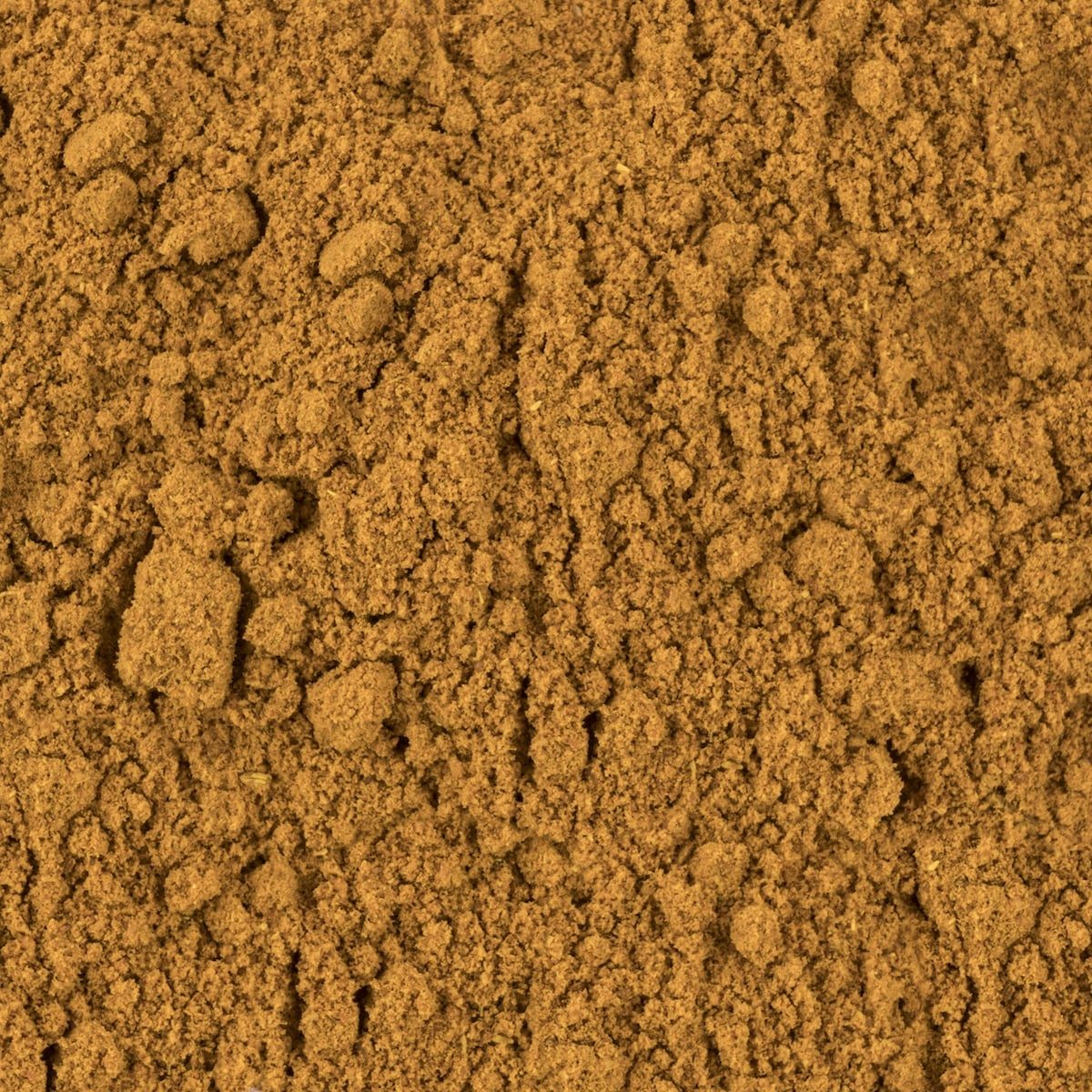
The “four spices” in quatre épices aren’t the same four from one source to the next. The versions we compared all build a finely ground blend on pepper, with nutmeg and cloves, but the fourth spice is ginger in some and cinnamon in others. It’s the classic seasoning for French charcuterie, from pâtés and terrines to sausages and rillettes, and for long-braised meat. Gernot Katzer calls it a kind of “enhanced” and “fortified” pepper, good anywhere black pepper is called for but you want a richer, deeper aroma.1
At a glance
| What it is | A French ground spice blend; the name means “four spices” |
| Core spices | Pepper (mostly white), nutmeg, cloves, ginger; cinnamon or allspice in some versions |
| Character | Pepper-forward; “enhanced” pepper (Katzer)1 |
| Main uses | Charcuterie (pâtés, terrines, rillettes, sausages), stews and ragoûts, pain d’épices |
| Form | Finely ground together |
What goes in it
Katzer gives the classic mix as nutmeg with a large share of white pepper (some versions use black), cloves and ginger, with allspice and cinnamon as optional extras, all finely ground together.1 On his black pepper page he lists pepper as a main part of the blend.2 Published versions differ on the fourth spice:
| Spice | Katzer (reference work)1 | Saveur, Joe Papach (2024 recipe)3 | Silk Road Spices (retail blend)4 |
|---|---|---|---|
| Pepper | Much white pepper; black in some variants | Black peppercorns, 10 g | White pepper |
| Nutmeg | Yes | Freshly grated, 4 g | Yes |
| Cloves | Yes | Ground, 3 g | Yes |
| Ginger | Yes | No | Yes |
| Cinnamon | Optional | Ground, 3 g | No |
| Allspice | Optional | No | No |
Saveur’s headnote says the blend is “usually” cloves, cinnamon, nutmeg and pepper. So the fourth spice is where sources split: ginger in Katzer’s classic version and in Silk Road’s, cinnamon in Saveur’s. In Saveur’s recipe, pepper makes up 10 of the blend’s 20 grams, half the total by weight.3 Woodland Foods sells a quatre épices but lists its ingredients only as “spices.”5
You’ll sometimes see cubeb pepper named as a possible pepper in the blend. None of the sources we reviewed mentions it.
Flavor and the compounds behind it
Pepper dominates, so the blend tastes of pepper’s bite first, rounded out by nutmeg’s warmth and the sharper, medicinal note of cloves. Each spice’s character traces back to specific compounds:
| Spice | Key compounds | Source |
|---|---|---|
| Pepper | Piperine, from which pepper’s characteristic flavor principally derives | Britannica6 |
| Nutmeg | Oil dominated by α- and β-pinene and sabinene; aromatic ethers (2–18% of the oil) include myristicin, elemicin and safrole | FAO, PROSEA78 |
| Cloves | Bud oil 70–90% eugenol, with eugenyl acetate up to 17% | PROSEA9 |
| Ginger | Pungency from non-volatile phenolic compounds, the gingerols | PROSEA10 |
| Allspice (optional) | Berry oil 50–80% eugenol | PROSEA11 |
History
Katzer traces quatre épices to baroque-era cooking.1 You’ll often read a more specific origin story, in the Breton port of Saint-Malo, but we couldn’t find a source for it. We couldn’t check claims that it arrived alongside other colonial-era blends like Colombo powder, either.
How it is used
- Charcuterie. The blend is traditionally used to season sausages, salamis, pâtés, rillettes and terrines.
- Braised and stewed meat. It’s mostly used for meat dishes cooked or braised a long time, such as stews and ragoûts, and sometimes for sausages and pastries.
- Baking. It’s a key ingredient in pain d’épices, the French spice bread.
- Other ideas. Silk Road Spices says it’s mainly used for soups and suggests it as a dry rub for pork roast with salt and rosemary.4 Woodland Foods says it’s used mainly in France but also shows up in some Middle Eastern cuisines. That’s the merchant’s word, not a documented finding.5
Since it acts like a fortified pepper, it can go wherever pepper would in a long-cooked dish: lamb shanks, beef stews, pork roasts. Gratins and mashed potatoes take a pinch nicely too. Those are our cooking suggestions, not sourced uses. For French cooking more broadly, see French spices.
Making and storing it
Grind whole spices right before mixing for the most aroma. Saveur’s recipe says to use the blend right away or store it airtight in a cool, dark place for up to six months.3 That’s one recipe writer’s advice, not a tested shelf life.
Safety
Nutmeg is the one ingredient here with a documented overdose problem. The Tennessee Poison Center reports psychogenic effects from nutmeg at doses of 15 to 20 grams.12 For scale, Saveur’s whole batch of quatre épices contains 4 grams of nutmeg.3 See too much nutmeg for details.
You’ll see health claims attached to the blend: that it aids digestion, prevents foodborne illness or protects against dementia. We found no regulator summary or systematic review that supports any of them.
Substitutes and comparisons
The easiest stand-in is to make it from what you have: mostly ground white or black pepper, with smaller amounts of nutmeg, cloves, and ginger or cinnamon (the Saveur proportions above are one starting point). Ground allspice alone covers the clove-and-nutmeg side but not the pepper. Related pages: white peppercorns, black pepper, nutmeg, cloves, ginger, cinnamon, mace, allspice vs. black pepper, allspice vs. cloves and allspice vs. nutmeg.
Footnotes
-
Nutmeg and Mace (Myristica fragrans), Gernot Katzer’s Spice Pages. gernot-katzers-spice-pages.com · Reference work ↩ ↩2 ↩3 ↩4 ↩5
-
Black Pepper (Piper nigrum), Gernot Katzer’s Spice Pages. gernot-katzers-spice-pages.com · Reference work ↩
-
Joe Papach, “Quatre Épices (French Four-Spice Blend)”, Saveur, 2024. saveur.com · Publication ↩ ↩2 ↩3 ↩4
-
Quatre Épices, Silk Road Spices (product page). silkroadspices.ca · Merchant ↩ ↩2
-
Quatre Spices, Woodland Foods (product page). shop.woodlandfoods.com · Merchant ↩ ↩2
-
“Black pepper”, Encyclopaedia Britannica, 2026. britannica.com · Reference work ↩
-
“Production, handling and processing of nutmeg and mace and their culinary uses”, FAO. fao.org · Reference work ↩
-
Myristica fragrans, Plant Resources of South-East Asia (PROSEA). uses.plantnet-project.org · Reference work ↩
-
Syzygium aromaticum, Plant Resources of South-East Asia (PROSEA). uses.plantnet-project.org · Reference work ↩
-
Zingiber officinale, Plant Resources of South-East Asia (PROSEA). uses.plantnet-project.org · Reference work ↩
-
Pimenta dioica, Plant Resources of South-East Asia (PROSEA). uses.plantnet-project.org · Reference work ↩
-
“Nutmeg, a Potentially Uninvited Holiday Guest?”, Tennessee Poison Center, Vanderbilt University Medical Center, 2020. vumc.org · Reference work ↩