Spices · Profile
Turmeric: Flavor, Uses, Health Evidence and Lead Safety
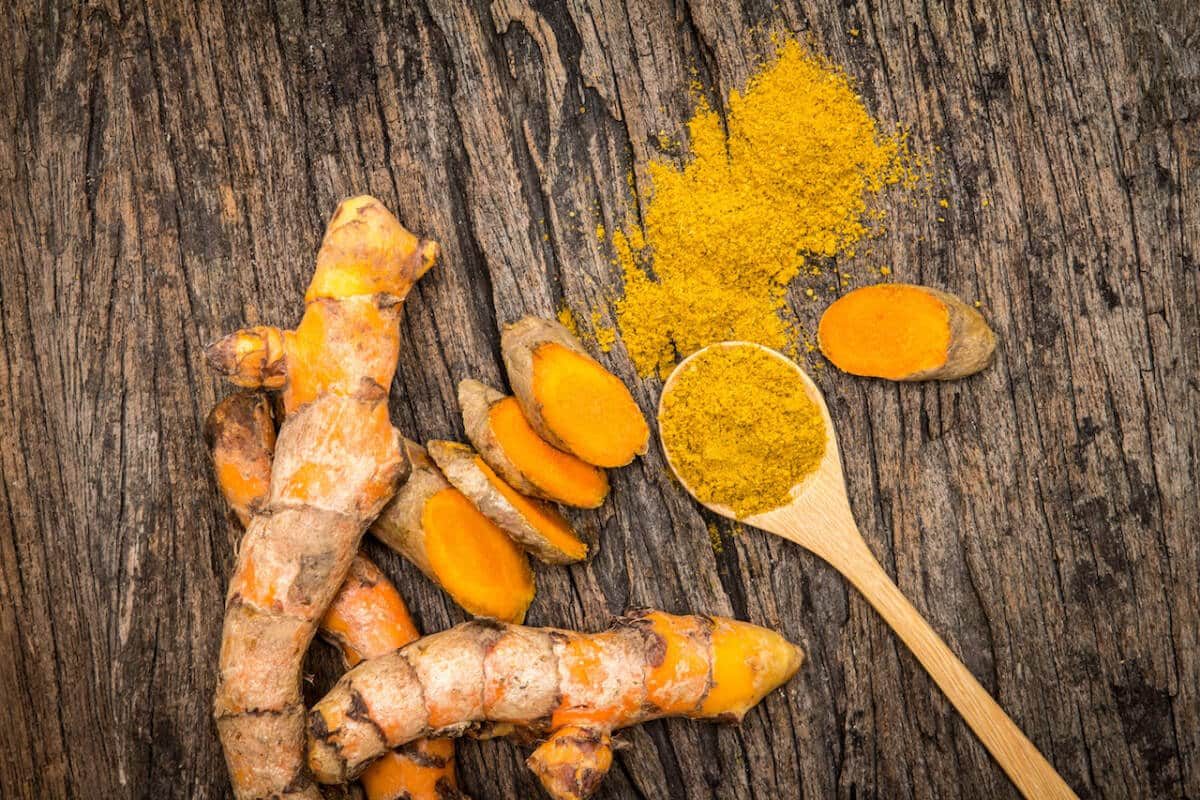
Turmeric is the boiled, dried and ground rhizome of Curcuma longa, a plant in the ginger family. Most cooks use it for its color first and its flavor second, and both come from compounds that have been measured: curcuminoids for the yellow, turmerones for the smell. It is also the subject of a very large body of health research that, taken together, shows much less than the marketing suggests, and of a well-documented adulteration problem with lead chromate.
At a glance
| Botanical name | Curcuma longa L.1 |
| Plant family | Zingiberaceae (the ginger family)1 |
| Part used | Rhizome, used fresh or boiled, dried and ground2 |
| Origin | Known as a cultigen from southwest India (Kew)1 |
| Main producer | India: 1,105,321 tonnes of dry turmeric from 310,963 hectares in 2024-25 (final figure, Spices Board)3; about 70% of world production according to India’s commerce minister in January 2025;4 58–66% of world export value each year 2020–2024 (Spices Board)5 |
| Forms sold | Fresh rhizome (“fingers”), dried whole rhizome, ground powder; also oleoresin and extracts for coloring26 |
| Color compound | Curcuminoids, mainly curcumin7 |
| Aroma compounds | Turmerone, ar-turmerone and zingiberene2 |
Measured values
18 figures, sourced| Measure | Value | Scope | Source |
|---|---|---|---|
| Essential oil | 3.97 (average); 3.0 to 5.16 (range) % of dried rhizome | Dried rhizomes from three growers in Bahia, Brazil, collected February 2011, hydrodistilled 4 hoursDescribes those samples, not turmeric in general. | scielo.br |
| ar-Turmerone | about 40 % of essential oil | Dried rhizomes from three growers in Bahia, Brazil, collected February 2011, hydrodistilled 4 hours | scielo.br |
| α-Turmerone | 10 % of essential oil | Dried rhizomes from three growers in Bahia, Brazil, collected February 2011, hydrodistilled 4 hours | scielo.br |
| Curlone | 23 % of essential oil | Dried rhizomes from three growers in Bahia, Brazil, collected February 2011, hydrodistilled 4 hours | scielo.br |
| Curcumin | 5–6.6 % of turmeric | Compositional profile of the spice, Prasad and Aggarwal reference chapter (2011)Different scope from LiverTox's figure for extracts; do not compare directly. No figure was found for retail ground turmeric. | ncbi.nlm.nih.gov |
| Volatile oil | under 3.5 % of turmeric | Compositional profile of the spice, Prasad and Aggarwal reference chapter (2011) | ncbi.nlm.nih.gov |
| Moisture | above 9 % | Compositional profile of the spice, Prasad and Aggarwal reference chapter (2011) | ncbi.nlm.nih.gov |
| Curcumin | 1% to 6% % by dry weight | Whole turmeric extracts, NIH LiverToxDifferent scope from the reference-chapter profile of the spice. | ncbi.nlm.nih.gov |
| Lead | 48 µg/g, geometric mean | 503 turmeric root and powder samples from 34 cities in eastern India, 2021–2023 (Forsyth et al. 2026); Bihar (all 15 cities sampled)Contaminant (lead chromate adulteration). 30% of all 503 samples exceeded India's 10 µg/g limit. | nature.com |
| Lead | 6,416 µg/g, maximum | 503 turmeric root and powder samples from 34 cities in eastern India, 2021–2023 (Forsyth et al. 2026); Bihar | nature.com |
| Lead | exceeded 1,000 µg/g | Samples from Patna, Karachi and Peshawar, in a study of 356 samples from 23 South Asian cities, 2020–2021 (Forsyth et al. 2024)14% of samples had lead above the 2 µg/g detection threshold. | fsi.stanford.edu |
| Lead | below quantification limit up to 1.87 mg/kg | 13 raw rhizomes collected from farms in six Indian states, 2026 (Toxics Link)Consistent with lead chromate being added after harvest. | toxicslink.org |
| Lead | 0.11 ppm, median | 32 ground turmeric samples bought around Boston, 2011–2012 (Cowell et al. 2017)Lead found in all samples. | journals.sagepub.com |
| Lead | up to 99.50 ppm | 32 ground turmeric samples bought around Boston, 2011–2012 (Cowell et al. 2017)The two highest came from Bangladesh. | journals.sagepub.com |
| Lead, maximum Limit | 10 µg/g (10 mg/kg) | India's limit for lead in turmeric | nature.com · toxicslink.org |
| Lead, maximum Limit | 2.0 mg/kg | Codex contaminants committee (CCCF17, 2024) level for "spices, dried rhizomes and roots, including galangal"Whether it applies to turmeric is unconfirmed: turmeric is not named, the level was based on ginger data, and CXS 193 could not be opened. | fao.org · tomorrowsfoodandfeed.khlaw.com |
| Curcumin half-life under white LED light | 9.9 hours | Turmeric oleoresin (a solvent extract, not powder), 2025 lab study (Kim, Oh, Hong)Samples kept in the dark showed no significant color loss over 24 hours. | mdpi.com |
| Curcumin half-life under fluorescent light | 15.1 hours | Turmeric oleoresin (a solvent extract, not powder), 2025 lab study (Kim, Oh, Hong) | mdpi.com |
Each figure is quoted as its source states it, with the samples or standard it applies to. Where sources differ, both are shown; nothing is averaged. All measured values
Flavor, aroma and the compounds behind them
Ground turmeric tastes earthy and bitter with a faint sweetness, and a raw, slightly musty edge when it hasn’t been cooked. Fresh rhizome is brighter and more gingery. That description is editorial; the chemistry behind it is not.
The aroma comes from the volatile oil. A standard reference chapter names turmerone, ar-turmerone and zingiberene as the compounds responsible for turmeric’s smell.2 One measured example: dried rhizomes from three growers in Bahia, Brazil (collected February 2011, hydrodistilled for 4 hours) gave an average of 3.97% oil, ranging from 3.0% to 5.16%, and that oil was about 40% ar-turmerone, 10% α-turmerone and 23% curlone.8 Those figures describe those samples, not turmeric in general.
The color comes from curcuminoids. Published figures for how much curcumin turmeric contains depend on what is being measured:
- The Prasad and Aggarwal reference chapter gives curcumin at 5–6.6% of turmeric, with volatile oil under 3.5% and moisture above 9%.2
- NIH’s LiverTox gives curcumin as 1% to 6% by dry weight of whole turmeric extracts.9
These are different scopes (a compositional profile of the spice versus a range across extracts) and neither tells you what is in a particular jar. No published figure was found for curcumin content across retail ground turmeric.
Origin and history
Kew’s Plants of the World Online treats Curcuma longa as a cultigen from southwest India: a plant known from cultivation rather than from wild populations.1 A widely repeated claim says it grows wild in the forests of south and Southeast Asia; Kew’s account does not support it. A broader reference describes it as native to tropical South Asia and widely grown across the tropics.2
Its use in India is old. The Prasad and Aggarwal chapter dates it to nearly 4,000 years ago in Vedic culture, and describes a long medicinal history in South Asia, including in Ayurveda.2 The rhizome has also been used as a textile dye and in cosmetics.27 Whether dye use came before culinary use, as is sometimes claimed, could not be traced to a source.
To turn the fresh rhizome into the spice, the rhizomes are boiled or steamed, sun-dried and then polished to remove the rough outer skin.2 Boiling removes the raw smell, gelatinizes the starch and evens out the color.2 Polishing matters for safety: it is the step where lead chromate is most often added (see Safety below).10
How it is used
South Asia. Turmeric is a base spice of Indian and wider South Asian cooking, in dal, vegetable and meat dishes, and in fresh turmeric pickle.2 It gives curry powders their characteristic yellow.2 See curry powder, Madras curry powder and sambar powder.
Iran. Turmeric commonly goes in early with the onions in Persian stews, though no source was found that states this as a rule. In Najmieh Batmanglij’s fresh herb khoresh, for example, onions are browned with the meat in oil and then seasoned with salt, pepper and turmeric.11
Cambodia. Kroeung is a Khmer term for a family of herb and spice pastes; the yellow version, made with fresh turmeric, is the base of amok.12
Thailand. In southern Thai gaeng som (sour fish curry), fresh turmeric is essential and gives the soup its orange color, according to Thai food writer Mark Wiens.13
Vietnam. Hanoi’s cha ca is fish marinated in turmeric and served with masses of dill.14
South Africa. Turmeric is traditionally used to color boiled white rice yellow.2
Industry. Turmeric is used in prepared mustard, cereals, chips, cheese and butter.2 In the US it is a permitted color additive, which 21 CFR 73.600 defines as the ground rhizome of Curcuma longa, allowed for coloring foods generally at good-manufacturing-practice levels.15 In the EU, curcumin is food additive E 100; EFSA’s re-evaluation set an acceptable daily intake of 3 mg per kg of body weight per day.16
Technique. Ground turmeric is usually cooked briefly in fat (as in the khoresh above, or a tadka) rather than added at the end; this cooks out the raw taste. That is common practice rather than a measured finding. Curcumin colors oil and stains readily; Wiens’s note that turmeric “stains everything” is not an exaggeration.13 More in cooking with turmeric.
Fresh versus ground. See fresh turmeric vs. powder.
What the health research shows
A widely repeated claim says turmeric works better than drugs such as steroids, chemotherapy and antidepressants; no credible source supports it.
Here is what NIH’s National Center for Complementary and Integrative Health concluded in its April 2025 review:
- Overall: there isn’t enough evidence to conclude that turmeric or curcumin is beneficial for any health purpose.7
- Knee osteoarthritis (oral): several meta-analyses have looked at it. The early evidence is positive, but higher-quality studies are needed before anything definite can be said.7
- Fatty liver disease (NAFLD): initial research suggests oral turmeric or curcumin might improve some measures, but which measures improve isn’t consistent.7
- Oral mucositis: initial research suggests oral or mouthwash forms might improve symptoms.7
- Everything else: not enough evidence either way.7
Turmeric and curcumin are used for their purported anti-inflammatory and antioxidant effects,9 and turmeric’s health effects are usually attributed to curcuminoids.7 A compound behaving a certain way in the lab does not establish an effect in people.
A practical point that often goes unmentioned: much of the research uses supplements, not the amounts of turmeric used in cooking, and some supplements are formulated to boost absorption (for example by adding piperine from black pepper).7 Those formulations carry the safety concerns below.
Safety
Supplements and the liver
Conventionally formulated oral turmeric or curcumin is likely safe at recommended amounts for up to 2 or 3 months, per NCCIH; side effects include nausea, reflux, stomach upset, diarrhea and constipation.7 Highly bioavailable curcumin formulations may harm the liver, and liver damage has been reported in people taking them.7
NIH’s LiverTox database rates turmeric as an established cause of clinically apparent liver injury (likelihood score A) and calls it the most common cause of herbal-related liver injury in the United States.9 It also estimates the injury is probably very rare, around 1 in 10,000 to 1 in 100,000 people exposed, and notes a strong association with the gene variant HLA-B*35:01, found in over 70% of cases versus 10–15% of controls.9 These findings concern supplements, not turmeric used as a spice.
NCCIH also says turmeric supplements may be unsafe in pregnancy, that little is known about amounts above food levels while breastfeeding, and that anyone taking medicines should talk to a health care provider before using herbal products because some interact.7
Lead chromate adulteration
Lead chromate is a bright yellow industrial pigment. Traders add it to turmeric roots to improve their color and, by some accounts, to hide pest damage;1017 it is the best-documented safety problem with the spice.
Eastern India, 2021–2023. A Stanford-led team collected 503 turmeric root and powder samples from 34 cities in Bihar, Jharkhand, Uttar Pradesh, West Bengal and Chhattisgarh. 30% (153 samples, from 25 cities) exceeded India’s permissible limit of 10 µg/g lead. Bihar was worst: all 15 cities sampled showed evidence of lead chromate, with a geometric mean of 48 µg/g and a maximum of 6,416 µg/g. Every sample above 10 µg/g also contained chromium at levels suggesting lead chromate.10 The study found the pigment is mainly added when dried roots are polished, with more sometimes added closer to sale, while inspections tended to focus on markets and grinding mills rather than polishing units.10
South Asia, 2020–2021. An earlier study by the same group tested 356 samples from 23 cities in India, Pakistan, Sri Lanka and Nepal. 14% (51 samples) had detectable lead above 2 µg/g, the study’s detection threshold rather than a legal limit. Samples from Patna, Karachi and Peshawar exceeded 1,000 µg/g, and samples with 18 µg/g or more had lead-to-chromium ratios near 1:1, consistent with lead chromate.18
Bangladesh: proof it can be fixed. After the Bangladesh Food Safety Authority used rapid lead testing to enforce penalties, the share of market turmeric with detectable lead fell from 47% in 2019 to 0% in 2021. Blood lead in the studied group fell by a median 30%.19
Farm-gate samples. An Indian NGO, Toxics Link, tested 13 raw rhizomes collected directly from farms in six states in 2026 and found lead from below the quantification limit up to 1.87 mg/kg, under India’s 10 mg/kg limit.20 That small sample is consistent with the eastern India study’s finding that lead chromate is added after harvest, mainly when dried roots are polished.10
United States. A 2017 study of 32 ground turmeric samples bought around Boston in 2011–2012 found lead in all of them, with a median of 0.11 ppm and a range up to 99.50 ppm; the two highest came from Bangladesh. Half the samples exceeded FDA’s 0.1 ppm guidance level for lead in candy, which the authors used as a benchmark because no spice-specific US limit existed.17 The study does not name the brands of its own samples: it identifies them by country of origin, and its figure marks two samples as the same, unnamed, brand.17
The same paper does name the products in earlier US recalls. As Cowell et al. list them: Archer Farms and Spice Hunter ground turmeric, recalled in 2011 for excessive lead; a Dr Clark brand turmeric supplement, recalled later that year; Pran ground turmeric, recalled in 2013 by four companies; and 38,000 pounds of turmeric distributed to Florida and New York by Spices USA Inc. They also report an FDA import alert targeting turmeric from Pran (Bangladesh), Visakarega Trading (India) and IndoVedic Nutrients (India).17
The 2016 nationwide recall began when routine sampling by New York State Department of Agriculture and Markets inspectors found elevated lead in Fresh Finds brand ground turmeric powder (3.75-ounce jars), which Gel Spice Inc. of Bayonne, New Jersey, had distributed to Big Lots stores nationwide; Food Safety News did not report the lead level.21 Cowell et al. report that seven brands of turmeric distributed by Gel Spice were recalled in August 2016.17
Limits. India’s limit for lead in turmeric is 10 µg/g (10 mg/kg).1020 Codex adopted a standard for dried or dehydrated turmeric (Curcuma longa) in 2024, and it requires the product to comply with the maximum levels in the Codex general standard for contaminants (CXS 193-1995).22 The same year, the Codex contaminants committee agreed a lead maximum of 2.0 mg/kg for “spices, dried rhizomes and roots, including galangal,” and the Codex Alimentarius Commission adopted lead limits for dried rhizomes and roots later in 2024.2324 Turmeric is not named in that decision. The committee’s report records that the proposed levels were based on data for one spice only, ginger,23 and a trade-law summary ties the 2.0 mg/kg level to products conforming to the Codex standard for dried ginger (CXS 343).25 The text of CXS 193 itself could not be opened for this page, so whether the 2.0 mg/kg level applies to turmeric is unconfirmed. No FDA limit specific to lead in turmeric was found.
What a buyer can do. Color is not a reliable guide: unusually vivid turmeric is a reason for suspicion, but lead chromate cannot be confirmed by eye. Buying from suppliers that publish heavy-metal test results is the only practical check, and it depends on trusting those results. This is practical judgment, not a sourced finding.
Buying and storage
As a rule of thumb, good ground turmeric is deep yellow-orange, smells earthy and slightly gingery, and has no musty or flat smell. Fresh rhizomes should be firm, not shriveled or soft. No published grading standard for retail turmeric was reviewed for this page.
In a 2025 lab study of turmeric oleoresin (a solvent extract, not powder), curcumin’s half-life under white LED light was 9.9 hours and under fluorescent light 15.1 hours, while samples kept in the dark showed no significant color loss over 24 hours.6 The study did not test powder, but as a practical precaution, store ground turmeric in an opaque, airtight container away from light.
Dried rhizome slices in one Brazilian study held their oil content and aroma profile reasonably well over six months of storage in paper bags.8 No source was found for a shelf-life figure for ground turmeric; commonly quoted figures could not be traced.
Substitutes and comparisons
Nothing replaces turmeric’s color and earthy bitterness together. For color, saffron, safflower and annatto work in different ways; for flavor, there’s no close match. See:
- Turmeric substitutes
- Too much turmeric? How to fix it
- Saffron vs. turmeric · Safflower · Achiote powder
- Turmeric vs. ginger · Galangal vs. turmeric · Zedoary · Fingerroot
- Turmeric vs. cumin · Turmeric vs. curry powder
Footnotes
-
Curcuma longa L., Plants of the World Online, Royal Botanic Gardens, Kew. powo.science.kew.org · Reference work ↩ ↩2 ↩3 ↩4
-
Prasad and Aggarwal, Turmeric, the Golden Spice, Herbal Medicine: Biomolecular and Clinical Aspects, 2011. ncbi.nlm.nih.gov · Reference work ↩ ↩2 ↩3 ↩4 ↩5 ↩6 ↩7 ↩8 ↩9 ↩10 ↩11 ↩12 ↩13 ↩14
-
Spice wise area and production in India, 2021-22 to 2025-26, Spices Board India. indianspices.com · Regulator ↩
-
News on AIR, National Turmeric Board launch, January 2025. newsonair.gov.in · Publication ↩
-
Government of India, Lok Sabha Unstarred Question 3848 annexures (Spices Board data), August 2025. static.pib.gov.in · Regulator ↩
-
Kim, Oh and Hong, Photodegradation of Turmeric Oleoresin, Molecules, 2025. mdpi.com · Peer-reviewed ↩ ↩2
-
Turmeric: Usefulness and Safety, NCCIH (NIH), April 2025. nccih.nih.gov · Regulator ↩ ↩2 ↩3 ↩4 ↩5 ↩6 ↩7 ↩8 ↩9 ↩10 ↩11 ↩12
-
Essential oil of Curcuma longa L. rhizomes, Química Nova, 2020. scielo.br · Peer-reviewed ↩ ↩2
-
LiverTox: Turmeric, NIDDK (NIH), June 2025. ncbi.nlm.nih.gov · Regulator ↩ ↩2 ↩3 ↩4
-
Forsyth et al., Lead chromate in turmeric across eastern India, npj Science of Food, 2026. nature.com · Peer-reviewed ↩ ↩2 ↩3 ↩4 ↩5 ↩6
-
Najmieh Batmanglij, Fresh Herb Khoresh, Asia Society. asiasociety.org · Publication ↩
-
Khmer Yellow Curry Paste (Kroeung), Saveur, 2015. saveur.com · Publication ↩
-
Mark Wiens, Southern Thai Gaeng Som Recipe, Eating Thai Food. eatingthaifood.com · Publication ↩ ↩2
-
Kitchen and Suvalko, Cha ca, SBS Food. sbs.com.au · Publication ↩
-
21 CFR 73.600, Turmeric (color additive). ecfr.gov · Regulator ↩
-
EFSA, Re-evaluation of curcumin (E 100) as a food additive. efsa.europa.eu · Regulator ↩
-
Cowell et al., Ground Turmeric as a Source of Lead Exposure in the United States, Public Health Reports, 2017. journals.sagepub.com · Peer-reviewed ↩ ↩2 ↩3 ↩4 ↩5
-
Forsyth et al., Evidence of turmeric adulteration with lead chromate across South Asia, Science of The Total Environment, 2024. fsi.stanford.edu · Peer-reviewed ↩
-
Forsyth et al., Food safety policy enforcement reduces turmeric lead chromate adulteration across Bangladesh, Environmental Research, 2023. gsb.stanford.edu · Peer-reviewed ↩
-
Toxics Link, Lead in Turmeric press release, July 2026. toxicslink.org · Publication ↩ ↩2
-
Ground turmeric recalled nationwide because of excessive lead, Food Safety News, 2016. foodsafetynews.com · Publication ↩
-
Standard for Dried or Dehydrated Roots, Rhizomes and Bulbs – Turmeric (CXS 359-2024), Codex Alimentarius. fao.org · Standard ↩
-
Report of the 17th Session of the Codex Committee on Contaminants in Foods (REP24/CF17), Codex Alimentarius Commission, 2024. fao.org · Regulator ↩ ↩2
-
Keller and Heckman, Main Outcome of the 47th Codex Alimentarius Commission, 2024. tomorrowsfoodandfeed.khlaw.com · Publication ↩
-
Leprêtre, Outcome of the 17th Codex Committee on Contaminants in Foods, National Law Review, 2024. natlawreview.com · Publication ↩