Spice Substitutes · Substitutes
Annatto Seed Substitutes, Ranked by the Color Job Annatto Is Doing
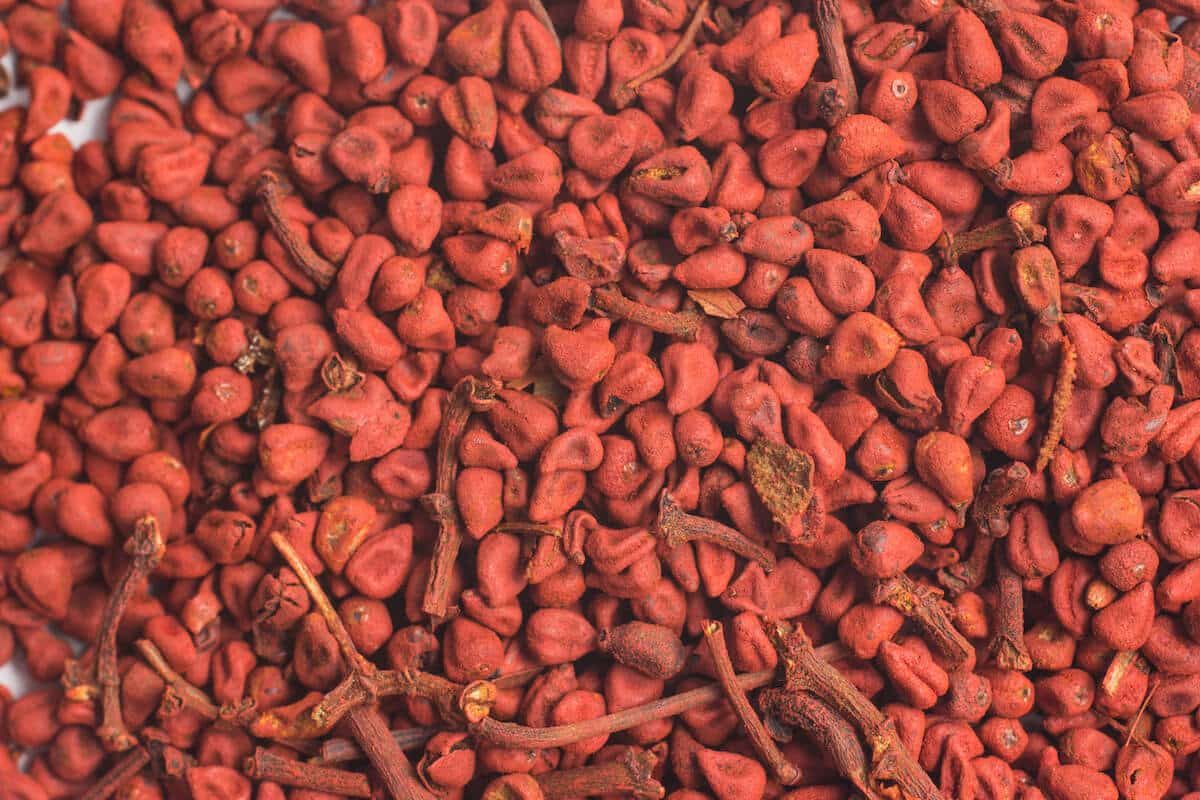
Out of annatto? Match the color and you’re most of the way there. In most dishes annatto is there for color, not flavor, and achiote powder is the same seed, so grab it if you can. Otherwise sweet paprika matches the red and turmeric the gold. The trick is getting the color into the right part of the dish, because annatto’s main pigment dissolves in fat, not water.
Quick answer
| What annatto is doing | Best substitute | Starting amount, per 1 part annatto | Treatment |
|---|---|---|---|
| Any job, if you can get it | Achiote powder or achiote paste (the same seed) | Powder: about 1 part; paste: see below | Method |
| Red-orange color in oil, marinade or recado | Sweet paprika | 1 part, then adjust for color | Method |
| Golden color in rice or a stew | Turmeric | 1/4 part, then add for color | Method |
| Golden color, where cost is no object | Saffron | A small pinch of threads | Method |
| Yellow color with almost no flavor | Safflower | 1 part, then adjust for color | Method |
How the ratios on this page are labeled
Every ratio carries one of four labels.
- Computed: based on a measurable physical relationship.
- Attributed: a named source publishes this ratio. We quote it as theirs.
- Disputed: named sources give different answers to the same swap. You get each one, side by side.
- Method: our starting point, based on how the two compare. Taste and adjust.
Since the job is color, add a little, look, and add more.
Why the form of the color matters
Annatto’s color comes from apocarotenoids, mostly bixin, which dissolves in oil; its cousin norbixin dissolves in water.1 The traditional way to use whole seeds is to fry them in fat. In the Caribbean, the seeds are fried in animal or vegetable fat, and that colored fat then goes into cooking vegetables or meat.2 For achiote oil, cook the seeds in hot oil until it turns bright yellow, then toss the seeds.3
Seeds vary a lot in how much pigment they hold, so two batches of annatto won’t color a dish the same. That’s one more reason to judge any substitute by eye.
If you can get the same seed in another form
Achiote powder or achiote paste
Achiote is the Mexican name for annatto, and achiote powder is just ground annatto. Cooks often soak whole seeds in hot water to soften them before grinding, and the powder saves you that step. In Mexico, a lot of achiote is sold as a paste of annatto seeds with some preservatives, such as acetic acid. Yucatecan recado, the spice paste behind dishes called pibil, is annatto plus other seasonings.2
Ratio (Method): Use about the same amount of powder as seeds, stir it into warm oil or the marinade, and adjust by color. Paste is a blend, so its strength depends on the brand. Start with a small spoonful, and remember it brings its own salt, acid and spices. Check the label.
If annatto is coloring oil, a marinade or recado red-orange
Sweet paprika
Paprika is your closest match for annatto’s red, and its color comes from the same pigment family, carotenoids.4 That’s the best reason to reach for it. The catch: paprika tastes of pepper, and hot paprika adds heat, so use a sweet (mild) one. Smoked paprika will add smoke.
Paprika will color oil if you stir it into warm fat for a minute. Keep the fat off high heat, since paprika scorches and turns bitter fast.
Ratio (Method): Start with the same amount of sweet paprika as the annatto called for, and adjust until the color looks right.
Paprika with a little turmeric
A little turmeric in the paprika pushes the color from red toward orange. Cooks do this; we found no test of it.
Ratio (Method): Start with 1 part paprika and a pinch of turmeric per part of annatto, and adjust by eye.
If annatto is turning rice or a stew golden
1. Turmeric
Turmeric is a strong enough colorant that the US lists ground turmeric as a color additive in its own right.5 The catch is flavor that annatto doesn’t bring. One reference describes turmeric’s taste as bitter and slightly acrid, yet sweet,6 and the color is yellow, where annatto’s is orange.
Ratio (Method): Start with about a quarter as much turmeric as annatto, and add more only if the color needs it. Too much tastes bitter before the color looks wrong.
2. Saffron
Saffron gives a golden color, the very color annatto is often used to imitate. The Spice House calls annatto “a much cheaper substitute” for saffron’s golden coloring, adding that it doesn’t replicate saffron’s flavor.3 Using saffron for annatto is that swap in reverse. The catch is cost and flavor. Saffron is the most expensive spice in the world, with a strong aroma and a bitter taste. It will change how the dish tastes in a way annatto doesn’t.
Ratio (Method): Start with a small pinch of threads steeped in a little warm water or broth, then add the liquid to the dish.
3. Safflower
Safflower florets bring color with almost no flavor. Katzer describes their taste as very weak and herbaceous and calls their value as a spice “nearly nil.”7 They’re used as a substitute for, and adulterant of, saffron as a food colorant, and their yellow pigment is water-soluble.8 The catch: the color is yellow, not red-orange, and Katzer calls it a poor imitation of saffron. With a water-soluble pigment, it should suit rice or broth better than a coloring oil, though that’s our inference and we found no test of it.
Ratio (Method): Start with the same volume of safflower as annatto, steeped in the cooking liquid, and adjust for color.
What isn’t known
- We found nothing on whether turmeric, saffron or safflower color oil the way annatto does.
Related
- Annatto seeds, achiote powder and cooking with annatto seeds
- Paprika and paprika substitutes
- Turmeric and turmeric substitutes
- Saffron, saffron substitutes and saffron vs. turmeric
- Safflower and safflower vs. saffron
- Sazón seasoning
Footnotes
-
Rivera-Madrid et al., “Carotenoid Derivates in Achiote (Bixa orellana) Seeds: Synthesis and Health Promoting Properties”, Frontiers in Plant Science, 2016. frontiersin.org · Peer-reviewed ↩
-
Gernot Katzer, “Annatto (Bixa orellana L.)”, Gernot Katzer’s Spice Pages. gernot-katzers-spice-pages.com · Reference work ↩ ↩2
-
“Annatto Seeds”, The Spice House. thespicehouse.com · Merchant ↩ ↩2
-
Paprika extract, Chemical and Technical Assessment, 77th JECFA, FAO/WHO. fao.org · Regulator ↩
-
21 CFR 73.600, Turmeric, US Code of Federal Regulations. ecfr.gov · Regulator ↩
-
Prasad and Aggarwal, “Turmeric, the Golden Spice”, in Herbal Medicine: Biomolecular and Clinical Aspects, 2011. ncbi.nlm.nih.gov · Reference work ↩
-
Gernot Katzer, “Safflower (Carthamus tinctorius L.)”, Gernot Katzer’s Spice Pages. gernot-katzers-spice-pages.com · Reference work ↩
-
Oyen and Umali, Carthamus tinctorius, Plant Resources of South-East Asia (PROSEA). uses.plantnet-project.org · Reference work ↩
Also drawn on
- Saffron, Encyclopaedia Britannica. britannica.com