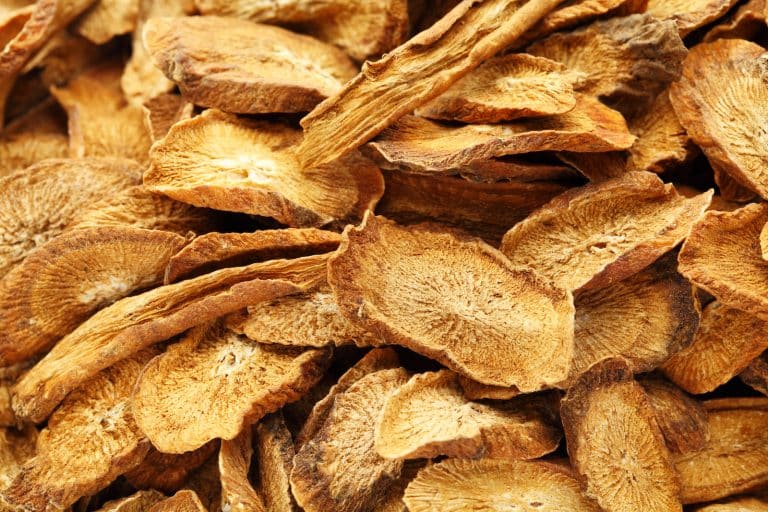
Burdock Root

Burdock Root: A Versatile Root Vegetable

Burdock root is native to Europe and Asia, but you can find it growing in North America as well. Like dandelion and echinacea, the burdock plant belongs to the Asteraceae family.

The burdock plant most likely made its way to the New World via its tendency to attach itself to clothing. It has hook-like prickles on its seed heads. It is this attachment mechanism that was the inspiration for hook-and-loop Velcro technology.

The Ancient Greeks used burdock root, which they referred to as arcion. According to Dioscorides, the Roman name for burdock root was lappa. Dioscorides believed that burdock root was useful for treating coughs.

The 1st-century physician Celsus recommended the combination of pounded burdock root and wine as a topical treatment for venomous bites.

Medieval mystic Hildegard of Bingen used burdock root to treat cancer. Burdock was used in a 12th-century preparation for treating fevers documented in The Trotula. The Anglo Saxons called burdock root clate. They used it to make a salve and had medications with catmint for hemorrhoids and for an eye ailment that is most likely a sty.
Read more

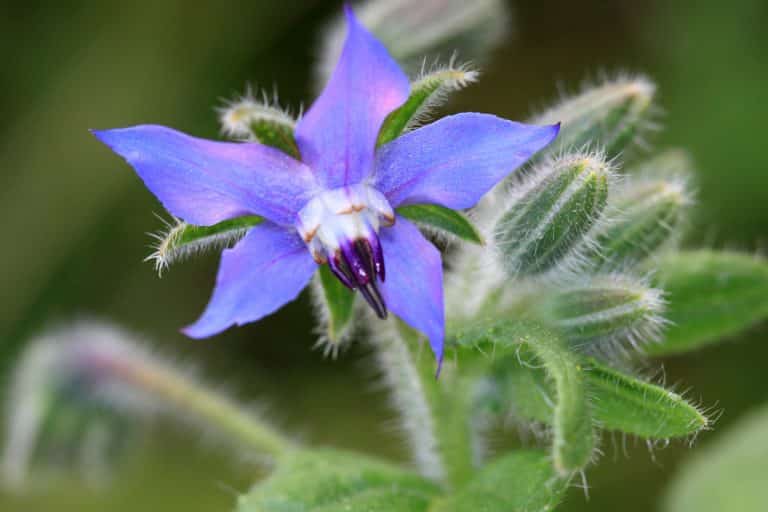
Borage

Borage: A Flavorful Herb For Enhancing Mood

Borage comes from the Mediterranean region but grows all over the world today. It belongs to the same family as forget-me-nots. The Ancient Greeks are known to have used borage. Some historians believe that borage is the herb that Homer refers to as nepenthe. Polidamma, the Egyptian queen is recorded as having given a borage potion to Helen of Troy to ease her sadness.

Roman soldiers are said to have consumed borage mixed with wine before going into battle. It is said to have calmed their nerves and made them more courageous.

Both Pliny and Dioscorides believed borage to be effective for improving mood and acting as a sedative.

Read more

guajillo powder

Guajillo Powder: Fruity, Subtle Heat

Guajillo powder is made up of ground guajillo chilies, which are another popular variety of Mexican chili pepper. As with other Mexican chilies like the ancho pepper, the fresh form of the guajillo has a different name. When fresh, the guajillo chilies used to make guajillo powder are called mirasol peppers. Mirasol means looking at the sun and refers to the fact that the peppers often grow pointing straight up. When dried, the seeds of these peppers make a rattling sound when they are shaken. That sound is similar to the sound from dried gourds. The name guajillo translates to little gourd.

In the 1600s Bernadino de Sahagun would catalog the Aztec’s use of chili peppers along with how they ranked them according to heat. He would document the use of many varieties that are still in use today, including mirasol chilies.

Today, mirasol peppers used to make guajillo chilies are cultivated primarily in the central and northern parts of Mexico. Durango and Aguascalientes are some of two of the states known for producing these chilies.

Read more

Daikon radish seeds

Daikon Radish Seeds: A Universal Japanese Spice

Daikon radish seeds come from the daikon plant, which is a winter radish with a mild flavor. Its name translates from the Japanese for big root. Most of the world’s daikon supply is cultivated in Japan and is consumed there as well, though the root vegetable is eaten all over Asia.

Historians believe that daikon radishes most likely originated in the Mediterranean region but that they reached Japan somewhere in the 300-400 AD period. The daikon root is ubiquitous in Japanese cooking; it is common to see it grated and used as a condiment on raw, oily fish like mackerel.

Read more

fennel pollen

Fennel Pollen: An Intense Tuscan Spice

While fennel pollen’s name may seem self-explanatory, there is more to it than the fact that it is the product of flowering fennel plants. For example, fennel pollen is collected from wild fennel plants and this collection is performed by hand. Fennel pollen is mostly foraged rather than cultivated, though …

Read more

coconut flour substitute

What’s A Good Coconut Flour Substitute?

Coconut flour is a great alternative to wheat flour if you are trying to avoid gluten or just want a more nutritious option. Coconut flour offers a lot more in terms of fiber and other nutrients, but it is not without its drawbacks. For example, it will require increasing the proportion of eggs and other liquid ingredients in many recipes. Another downside is the fact that it is not yet a common product so you may not be able to find it in your local grocery store. These are just a couple of the reasons that you may find yourself needing a coconut flour substitute. Your best options are listed below.

Read more

Korintje Cinnamon

Korintje Cinnamon: The Most Popular Cinnamon

Korintje cinnamon is a variety of cassia cinnamon. Because the names cassia and cinnamon are used interchangeably, it is easy to confuse them. To make matters even more complicated, korintje cinnamon is sometimes called by other names as well. For example, it is sometimes called Padang cassia. The name refers to Cinnamomum burmannii, which is a close relative of the other forms of cassia as well as of true cinnamon (Ceylon cinnamon). In fact, it is the variety with which most people in the U.S. are familiar. Korintje cinnamon is popular in commercial bakeries because of its low cost and because it is the flavor that most Americans expect. It is also known as Java or Indonesian cinnamon.

Much of the world’s korintje cinnamon is found in Western Sumatra, which is where it was first cultivated. It was first cultivated in the area around the city of Padang; specifically, the Kerinci Regency. Korintje is the Dutch word for Kerinci. The spice was cultivated by the Dutch during their colonial reign in Indonesia. This variety of cinnamon differs from Ceylon cinnamon as well as from cassia varieties in that it is harvested from higher altitudes. It is also harvested at a different time of year from the other varieties.

Korintje cinnamon is believed to be the variety of cassia referred to in China as kwei-shi. The name cassia is believed to have come from the kwei-shi name or from the name of India’s Khasi people.

In Hawaii, it is listed as an invasive species and a threat to more than a dozen local species.

Read more

spices and herbs for weight loss

What Are Good Spices And Herbs For Weight Loss?

Most herbs and spices offer a multitude of health benefits as a result of the nutrients they contain. Though one of the most sought after benefits doesn’t focus on what you gain, instead it focuses on what you lose. Yes, certain herbs and spices can help you lose weight. The mechanism of weight loss can differ from spice to spice, but all of the herbs and spices below have proven to be good choices for helping you shed those extra pounds. 

Read more