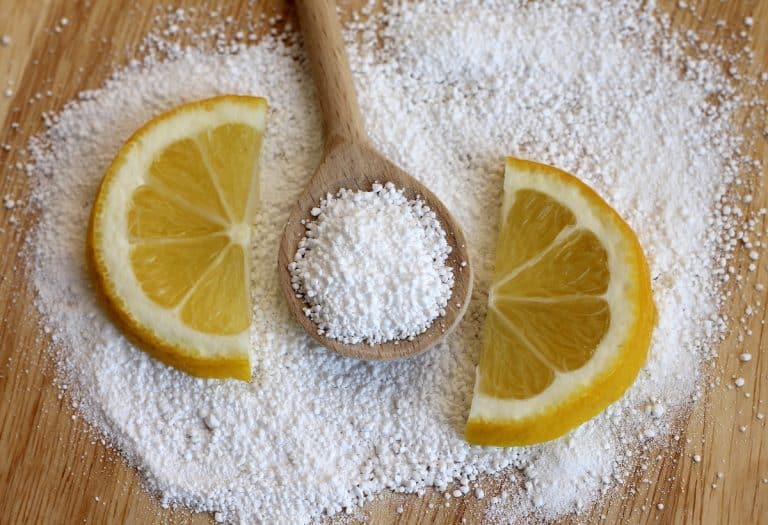
Pectin Powder

Pectin Powder: The Fruit Thickener

Pectin was discovered by Louis Nicolas Vauquelin in 1790 but it took more than three decades for another French scientist named Henri Braconnot to isolate it. He discovered that it was the main component in fruit that was responsible for the congealing properties that enabled gelling when the fruit was boiled with sugar. Among his discoveries were that sugar was crucial to the gelling, as was the pH. It was also Braconnot who came up with the term pectin from a Greek word for congealing or solidifying.

The discovery and isolation of pectin made the production of jams and jellies more efficient, but the knowledge of how to make them had been around for centuries. Housewives routinely dealt with gluts of fruit by combining those fruits known for their gelling properties with other fruit with other non-gelling fruit to make jams and jellies. For example, crabapples have long been known to cause preserves to gel. Crabapples could be combined with other fruits like strawberries that had little pectin and thus little gelling ability.

Read more

Gelatin powder

Gelatin Powder: A Meat-Based Gelling Agent

The use of gelatin goes all the way back to ancient Egypt, though it’s usage there seems to have been as an adhesive rather than a food. The same goes for ancient Rome, where Pliny wrote about using collagen-based fish glues. Gelatin’s first culinary applications were in 15th Century England. Made from boiled cattle hooves, gelatin dishes in this era featured meats and vegetables encased in aspic. Other medieval dishes that featured gelatin included fish jellies made with jellied eel stock.

A method to extract gelatin from animal bones was invented by a Frenchman named Denis Papin in the late 17th century.

Aspic would show up on European tables towards the close of the 18th century. The word’s origin may have had something do with the poisonous snake known as an asp, but that is uncertain. The aspics in 18th-century cuisine were savory jellies that encased savory ingredients much like the medieval versions.

In the middle part of the 19th century, an industrialist named Peter Cooper obtained the first patent for making a gelatin dessert. He never used the patent and instead sold it to a cough syrup maker named Pearle B. Wait in 1895. Wait made gelatin into a commercial food product with the addition of fruit syrup. Around this time, another gelatin maker named Charles Knox came up with a way to granulate gelatin. The first powdered gelatin was the result of his efforts. Before his work, gelatin came in large sheets that had to be soaked for long periods.

Read more

meringue powder substitute

Meringue Powder Vs. Cream of Tartar: SPICEography Showdown

Both meringue powder and cream of tartar are useful ingredients that most serious bakers will have in their spice cabinets. Because both often show up in the same desserts, it is possible to confuse them if you are unaware of what they do and how they differ. We will take a look at meringue powder vs cream of tartar in this installment of SPICEography Showdown.

Read more

citric acid

Ascorbic Acid Vs. Citric Acid: SPICEography Showdown

Ascorbic and citric acids are two organic acids used as preservatives in canning and other culinary applications. Both are sometimes used in the same way and have a connection to citrus fruit, which makes it easy to get them confused but there are some crucial differences. In this SPICEography Showdown, we will look at what is special about these food additives, how they are used and how each of them can work in your cooking.

Read more

agar agar powder

Agar Agar Powder: A Gelling Agent From the Sea

Agar agar powder is often referred to simply as agar or agar powder. Another name for it is kanten, which is the name used for it in Japan. Legend has it that agar agar powder was discovered by an innkeeper in 17th century Japan who found that some discarded seaweed soup had gelled after being disposed of outdoors on a winter night. Over the centuries since its discovery, agar agar would become a popular ingredient in Asian food. Even though it was discovered in Japan, the name agar agar is Malaysian in origin and means jelly. It may have reached Malaysia via the Dutch as they traded with Japan and maintained an outpost in Malaysia for almost two centuries.

The seaweed used to make agar agar powder is called Gelidium corneum requires turbulent water and rocky seabeds to grow. It cannot be cultivated and must be harvested wild. Much of the harvesting is done by divers, though it is sometimes harvested when it washes ashore.

Read more

egg white powder

Egg White Powder: Egg Whites With A Long Shelf Life

Egg white powder is simply egg white that has been spray dried. Spray drying involves spraying the egg whites into hot air within a dryer chamber; it is essentially the same as the process used to make powdered milk. Early forms of egg white powder were made by drying the egg whites and then grinding them into powder. The spray drying process eliminates the need for grinding. After being spray dried, the egg white powder is pasteurized to rid it of microbial contamination.

Powdered eggs have been around since the early part of the 20th century; they were mentioned as a staple of camp cooking by the Boy Scouts. The benefit was the same as that of powdered egg whites, which is that it is a shelf stable product.

The method of spray drying egg was developed as a means of supplying the military with food that did not require refrigeration.

Read more

jaggery sugar

Jaggery Sugar: An Ancient Indian Sweetener

Jaggery sugar is sugar in block form made from the juice of the sugarcane and sometimes from the sap of the date palm tree. It is consumed in Africa, parts of the Americas, and Asia. It is most widely used in India. While some sources claim that jaggery was brought to India by the Portuguese, it is more likely that it originated in the subcontinent. The Indian name for jaggery is gur and the Indian government claims that practitioners of Ayurvedic medicine have been using it for 3,000 years. However, the name jaggery actually comes from the Portuguese word jagara.

The Indian origin of jaggery sugar is more likely given the fact that India has been connected to the production of sugar for much of the time that sugar has existed. The sugarcane made its way to India from Polynesia before sugar made from it slowly spread through the rest of the world.

Read more

rapadura sugar

Rapadura Sugar: Brazil’s Unrefined Sugar

Rapadura sugar is a type of minimally processed sugar that goes by many names. The term minimally processed means (among other things) that it has not been centrifuged to remove its natural molasses. It also means that the sugarcane juice used to make it has been boiled at a relatively …

Read more